
Guilt is a common and complex emotion for those caring for a loved one. In this Farmoderm guide, we will explore how to recognize the signs of it and what strategies to adopt-from self-care to asking for help-to transform this burden into a more serene and conscious management of one’s role.
Table of Contents:
How to know if you are suffering from “guilt”
II. What to do and what not to do against guilt
WHAT TO DO.
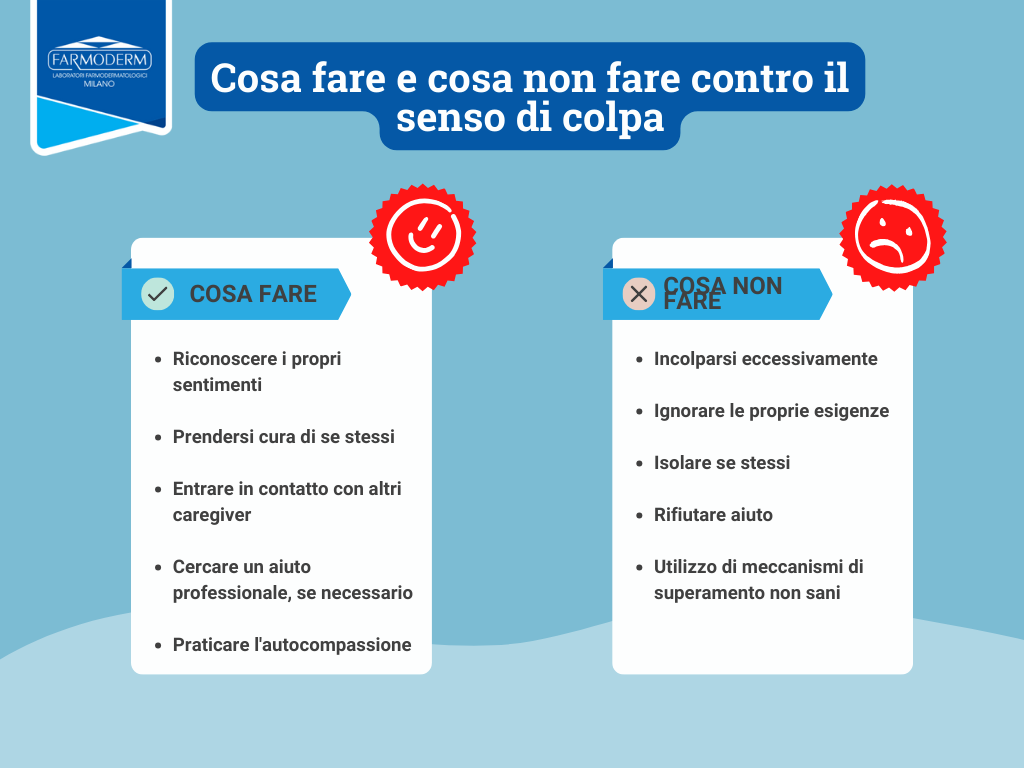
Recognizing one’s own feelings
Getting in touch with other caregivers
Seek professional help if necessary
WHAT NOT TO DO.
Use of unhealthy coping mechanisms
IV. Frequently asked questions
1. Before starting :
1. Understanding what “guilt” is :
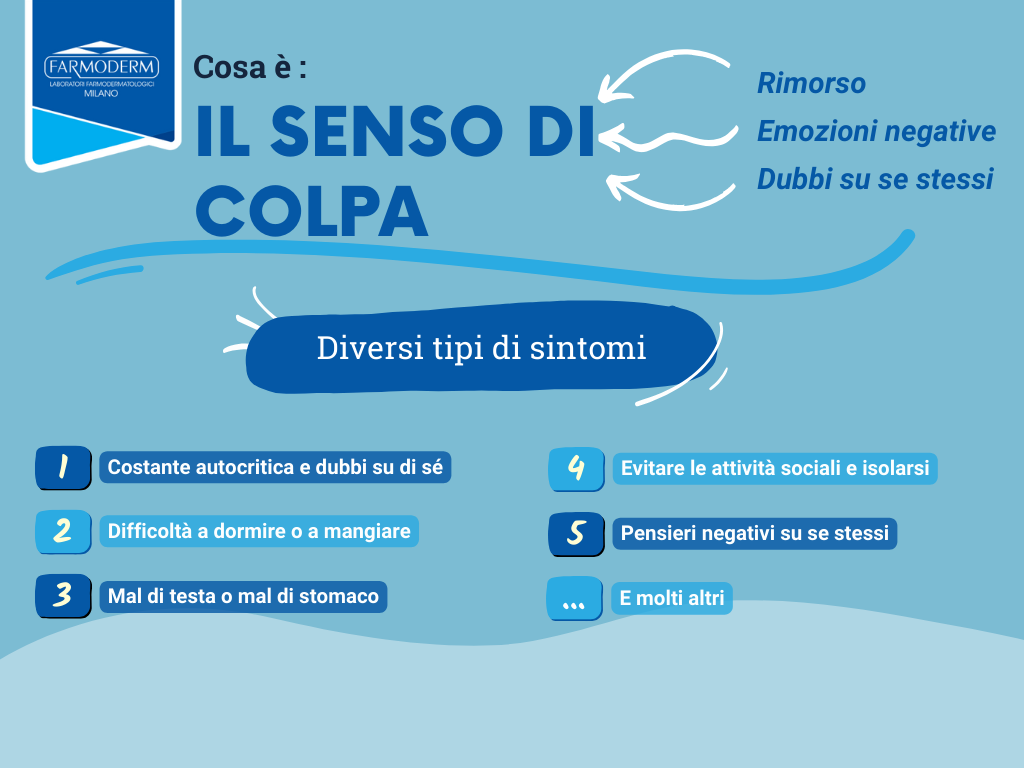
Guilt is a feeling of responsibility or remorse for something one has done or not done. It is a negative emotion that can result from actions or decisions that violate one’s values or beliefs, or from having caused harm to another person.
Guilt can also result from perceived failures or shortcomings and can manifest itself in feelings of self-doubt and inadequacy. Guilt is a natural emotion that can be healthy when it motivates a person to make amends or change his or her behavior, but it can become overwhelming and debilitating when it is excessive or misplaced.
2. How to know if you are suffering from “guilt” :
Symptoms of guilt as a caregiver can vary, but some common signs include:
Feelings of remorse or responsibility for your loved one’s condition or situation.
Constant self-criticism and self-doubt.
Difficulty sleeping or eating due to preoccupation with thoughts of guilt.
Difficulty concentrating and completing daily activities.
Physical symptoms such as headache or stomachache due to emotional stress.
Avoid social activities or withdraw from friends and family.
Difficulty finding joy in activities that used to be enjoyable.
Difficulty accepting compliments or help from others.
Negative thoughts about oneself and feeling that one is not good enough.
Difficulty letting go of the past and feeling guilty for past decisions or actions.
Note that these symptoms can also be caused by other factors, and it is always best to consult a professional to determine the cause and the best way to manage it.
2. What to do and what not to do against guilt :
WHAT TO DO :
It is critical to understand that guilt is a natural emotion and that it is not your fault. Caregiving is a demanding job and it is normal to feel overwhelmed at times. You need to remember that no one is perfect and it is normal to make mistakes.
Here are some tips on how to manage guilt and other emotions as a caregiver:
3. Recognizing one’s own feelings :
Acknowledging your feelings is important when managing guilt and other emotions as a caregiver because it allows you to validate and understand what you are experiencing. It helps to identify the source of guilt, whether misplaced or not. By acknowledging one’s feelings, one gives oneself permission to feel them, rather than repressing or ignoring them, which can lead them to become more intense.
Recognizing one’s emotions also allows one to take steps to process and manage them in a healthy way. In addition, it can help to communicate one’s needs and concerns to others, such as family members, friends, or health care providers, which can be helpful in finding support and solutions.
4. Taking care of oneself :
Taking care of yourself is important when managing guilt and other emotions as a caregiver because it helps prevent burnout and maintain your mental and physical well-being. Caregiving can be emotionally and physically demanding, and neglecting your own needs can lead to stress, exhaustion, and a decrease in the quality of care you are able to provide.
In addition, taking care of yourself can help you be more resilient and cope better with the emotions and challenges that caregiving brings. This requires getting enough sleep, eating well, exercising, and taking time to relax and engage in activities you enjoy.
5. Getting in touch with other caregivers :
Connecting with others is important when managing guilt and other emotions as a caregiver because it allows for shared experiences and support. Caregiving can be a difficult and isolating experience, and talking with others who have experienced similar situations can help validate feelings and provide coping strategies.
The presence of a support system can help alleviate guilt by providing perspective and understanding. It can also provide an outlet for processing difficult emotions. Joining a support group or online community can provide a sense of camaraderie and understanding.
6. Seek professional help if necessary :
Seeking professional help is important for caregivers because caring for a loved one can be emotionally and physically demanding and can lead to feelings of guilt, stress, and burnout. A professional counselor or therapist can help caregivers identify and cope with these emotions, as well as provide strategies for self-care and stress management.
However, a professional can also help caregivers explore their own feelings and understand how these affect their actions or thoughts. This can help caregivers develop better coping mechanisms and create a more positive outcome for both themselves and the person they care for.
7. Practice self-compassion :
Practicing self-compassion is important for caregivers because it can help them be kinder and more understanding toward themselves as they face the emotional challenges of caregiving. Self-compassion is about treating oneself with the same kindness, care and understanding that one would offer to a good friend.
It can help caregivers recognize that guilt and other negative emotions are a normal response to the stress and demands of caregiving and not to blame themselves for it.
Self-compassion can help caregivers focus on their own well-being, which can lead to better physical and mental health. When caregivers take care of themselves, they are better equipped to care for their loved ones. Self-compassion also enables caregivers to be more forgiving of themselves when they are unable to meet their own or others’ expectations.
WHAT NOT TO DO :
Although it is normal to feel a range of emotions, it is good to be aware of some behaviors that can make it difficult to manage guilt and other emotions.
Here are some things caregivers should avoid when trying to manage guilt and other emotions:
8. Excessive blaming :
Blaming yourself excessively when managing guilt and other emotions as a caregiver can have negative consequences for both the caregiver and the person he or she cares for. Blaming oneself can lead to feelings of low self-esteem, guilt, and shame.
This can make it more difficult for the caregiver to cope with caregiving demands and can negatively affect his or her physical and mental health. In addition, excessive self-blame can lead to feelings of hopelessness and helplessness, which can make it more difficult for the caregiver to provide effective care.
Excessive self-blame also puts pressure on the caregiver to meet expectations that may be unrealistic or unattainable, resulting in disappointment and further self-blame. This can make it more difficult to make rational decisions and take positive steps toward resolving the situation. It may also be more difficult to accept support from others and build a support network.
9. Ignoring one’s own needs :
Ignoring one’s own needs when managing guilt and other emotions as a caregiver can have negative consequences for both the caregiver and the person they care for. Caregiving can be a challenging and stressful task, and it is essential that caregivers take care of their own physical and emotional well-being in order to provide effective care.
When caregivers ignore their own needs, they are more likely to experience physical and emotional burnout, which can negatively affect their ability to provide care. They may also become resentful and bitter, which can negatively affect the quality of care provided. Ignoring their own needs can also lead to feelings of guilt and shame, because caregivers may not be able to meet the expectations they have of themselves.
10. Isolate yourself :
Isolating oneself when managing guilt and other emotions as a caregiver can have negative consequences for both the caregiver and the person he or she cares for. Caregiving can be a challenging and stressful task, and it is essential that caregivers have a support network to provide effective care. When caregivers isolate themselves, they may lack access to the support and resources needed to cope with the emotional and physical demands of caregiving.
This can also lead to feelings of loneliness, hopelessness, and helplessness, which can make it more difficult for the caregiver to provide effective care. It can also increase the risk of depression and anxiety and negatively affect the caregiver’s physical and emotional well-being.
It is critical for caregivers to maintain social connections and seek support from family members, friends, and professional caregivers. Joining a support group or participating in online support groups specifically for caregivers can be a great way to connect with others who understand the challenges of caregiving and to receive support and advice.
11. Refusing help :
Refusing help when managing guilt and other emotions as a caregiver can have negative consequences for both the caregiver and the person they care for. Caregiving can be a challenging and stressful task, and it is essential that the caregiver has a support network to provide effective care.
When caregivers refuse help, they may lack access to the support and resources needed to cope with the emotional and physical demands of caregiving. This can lead to feelings of exhaustion, stress and burnout. Refusing help can also increase the risk of depression and anxiety and negatively affect the caregiver’s physical and emotional well-being.
It is therefore important that caregivers accept help when it is offered and seek support from family members, friends, and professional caregivers. This can help alleviate the emotional and physical demands of caregiving and improve the quality of care provided.
12. Use of unhealthy coping mechanisms :
The use of unhealthy coping mechanisms in dealing with guilt and other emotions as a caregiver can have negative consequences for both the caregiver and the person they care for. Unhealthy coping mechanisms may include behaviors such as substance abuse, overeating, or engaging in risky behaviors. These behaviors may provide temporary relief from stress and emotional distress, but they can ultimately make the situation worse.
Unhealthy coping mechanisms can lead to physical and emotional health problems and can make it more difficult for the caregiver to provide effective care. They can also lead to addiction, financial and legal problems. They can also negatively affect the caregiver’s relationships with family, friends and colleagues.
3. Conclusion
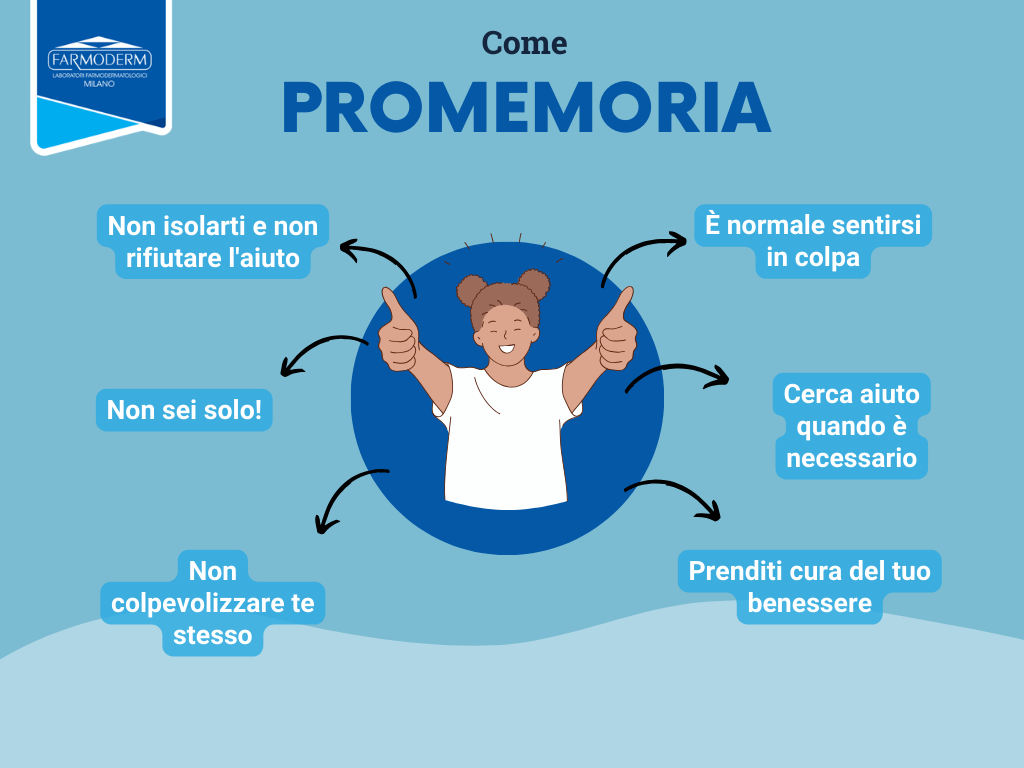
Caregiving can be an emotionally challenging role, but it is important to remember that it is normal to feel guilty and overwhelmed at times.
Therefore, it is necessary to seek professional help when needed, practice self-compassion, avoid excessive self-blame, take care of one’s own needs, do not isolate oneself and refuse help, and use healthy coping mechanisms.
Caregivers who take care of their own physical and emotional well-being are better equipped to provide effective care for their loved ones. It is also important to remember that it is normal to feel guilt and other negative emotions, and it is important not to blame yourself and to seek help when needed.
You need to take care of yourself, connect with other caregivers, seek professional help if needed, and practice self-compassion. Remember that you are not alone and that there is support available.
4. Frequently asked questions
Q: How can I deal with guilt as a caregiver?
A: It is normal to feel guilty as a caregiver, especially if the person you care for is in declining health or has passed away. To manage guilt, try to focus on the things you did rather than the things you didn’t do. If necessary, seek support from friends, family members or a therapist.
Q: How can I deal with the emotional strain of being a caregiver?
A: Being a caregiver can be emotionally demanding. To cope with the strain, try to set boundaries and make time for yourself to do things you enjoy. Seek support from your loved ones and consider joining a caregiver support group. It is also important to take care of your physical and emotional well-being by exercising regularly, eating healthy and getting enough sleep.
Q: How can I handle feelings of anger or resentment as a caregiver?
A: Caregiving can be a challenging and stressful task, and it is normal to feel angry or resentful at times. To manage these feelings, try to identify the source of your anger or resentment and address it directly. Communicate your feelings with the person you care for or a therapist. Also, try to find healthy outlets for your emotions, such as exercise or hobbies.
Q: How can I take care of my own emotional needs while assisting another person?
A: It is important to take care of your own emotional needs while taking care of someone else. To that end, try to set boundaries and make time for yourself to do things you enjoy. If necessary, seek support from friends, family members or a therapist. In addition, you need to take care of your physical and emotional well-being by exercising regularly, eating healthy and getting enough sleep.
Q: How can I deal with the pain and sadness of caring for a person with a terminal illness?
A: Caring for a person with a terminal illness can be a difficult and emotional journey. To cope with the grief and sadness, try to find a support system of friends, family or a therapist. Also, be sure to take care of your physical and emotional well-being by getting regular exercise, eating healthy and getting enough sleep. It may also be helpful to find healthy outlets for your emotions, such as writing, art, or music.