
Maintaining an active lifestyle is critical to preserving independence and quality of life during old age, as the body copes with natural changes that require specific care. Physical therapy is an essential pillar of health care: regularly performing targeted exercises helps older people improve mobility, flexibility and strength. However, getting to a clinic can often be complex; fortunately, many strengthening and balance exercises can be done comfortably at home with the support of a caregiver.
In this Farmoderm guide, we will explore safe routines–from the use of elastic bands to yoga–designed to stimulate not only physical but also mental well-being, reducing stress and anxiety. Our goal is to accompany each person in daily healing gestures, respecting individual limits without ever forcing progress. You will discover practical advice on what to do and what to avoid to turn physical activity into a time of dignified sociability and well-being.
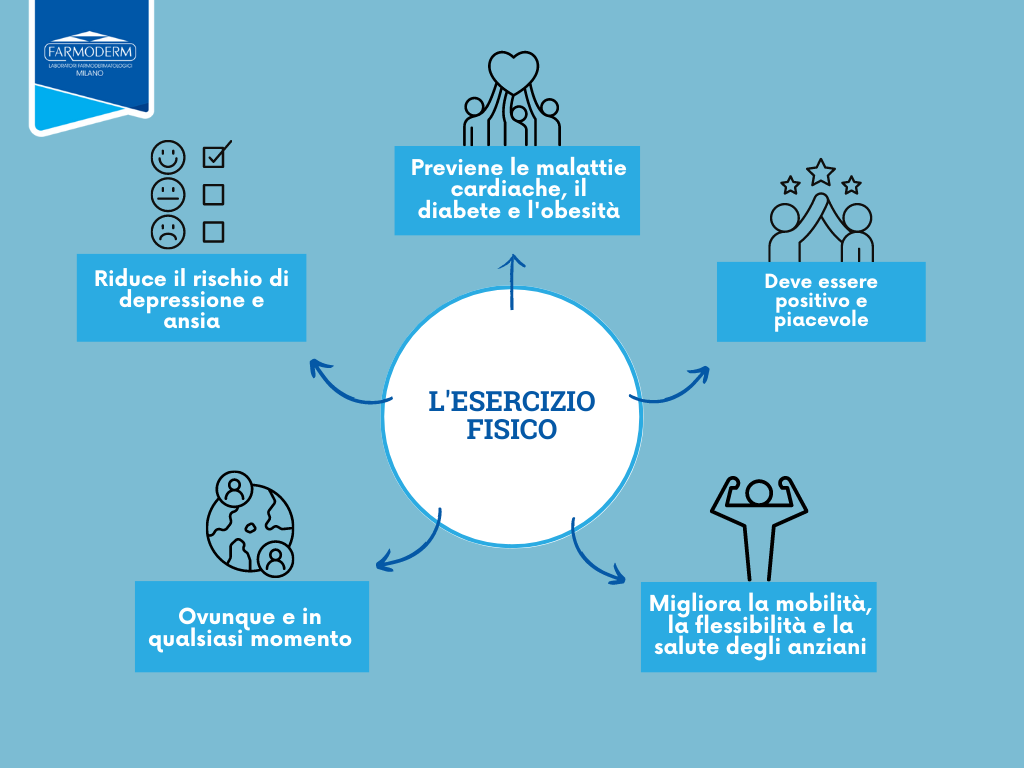
Exercise tips for the elderly: Recalls
Table of Contents:
- What to do and not to do in the exercises of the elderly
- I. Strengthening exercises
- II. Balance exercises
- III. Flexibility exercises
What To Do and What Not to Do
Although physical activities are really good for our bodies, it may happen that sometimes our elderly loved ones do not want to exercise.
If so, don’t force them!
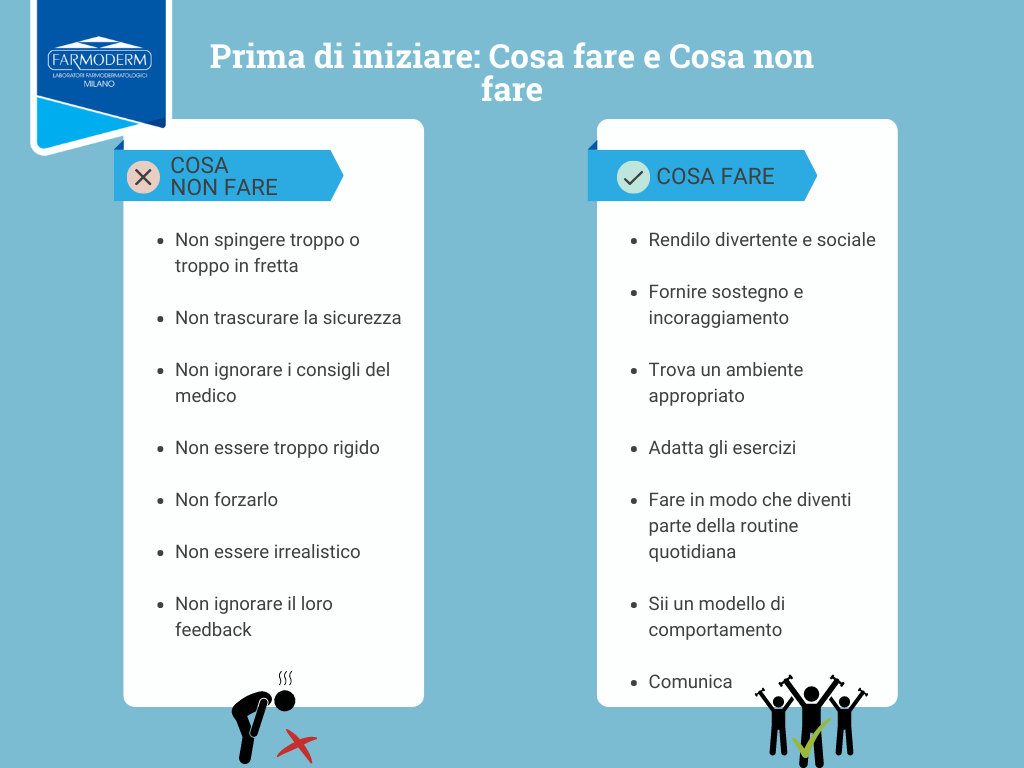
Exercise tips for the elderly: What to do and What not to do
What Not To Do
As a caregiver, it is important to keep in mind some things to avoid when helping an elderly loved one with physical activity:
- Do not force too much or too fast: it is important to start with a lower intensity and gradually increase over time, and avoid any exercise that causes pain or discomfort.
- Don’t neglect safety: make sure the environment is safe and that your loved one is using proper techniques and equipment.
- Don’t ignore your doctor’s advice: Always consult a doctor before starting a new exercise routine.
- Don’t be too rigid: It is important to be flexible and adaptable when it comes to physical activity. If you do not like a particular activity or it causes pain, you may need to modify it.
- Don’t force it: physical activity should be something your loved one wants to do, not something he or she feels compelled to do.
- Don’t be unrealistic: Be realistic about what your loved one can do and don’t push him to do more than he is capable of doing.
- Do not ignore his feedback: listen to the senior’s feedback on the activity and adapt it accordingly; it is important that he feels comfortable and enjoys it.
What to Do
As a caregiver, there are several things you can do to help your caregiver get physical activity:
- Have fun and socialize: physical activity can be more enjoyable and motivating when done in company. Look for group exercise classes, such as tai chi or yoga, designed specifically for seniors.
- Provide support and encouragement: Encourage your loved one to set realistic goals and celebrate with him or her small successes along the way.
- Find an appropriate environment: Choose a safe and comfortable place for your loved one to exercise, with good lighting and appropriate equipment (parks, at home, outdoors, in a dedicated exercise room, …).
- Adapt the exercises: many exercises can be modified to make them safer and more comfortable for older people, such as using a chair for support, using lighter weights or just body weight, shortening the movement or making it easier.
- Make it a part of the daily routine: incorporating physical activity into your loved one’s daily routine can make it more manageable and easier to stick to. You can create games and activities around the exercises, adding rewards or goals.
- Be a role model: leading by example can be a powerful motivator. If your loved one sees you as active, he or she may be more likely to follow your example.
- Remember to maintain open communication and to listen to the senior’s feedback on the activity: if he or she is not enjoying it or is experiencing pain, the activity may need to be modified.
Here are some examples of detailed step-by-step physical therapy exercises for the elderly that can be performed at home with the help of an assistant:
I: Strengthening exercises
It is important to note that before beginning any physical activity, a physical therapist should be consulted to ensure that the exercises are safe and appropriate for the individual’s abilities and condition. Caregivers should also be well trained and familiar with the exercises to ensure the safety of the elderly person.
A. Exercises with elastic bands
Elastic bands are a great way to increase arm and leg strength. Caregivers can help seniors hold the band and guide them through various exercises, such as curls for biceps, dips for triceps, and shoulder presses.
In addition, the resistance of the band should be chosen accordingly: it should be challenging but not too much so that the elderly person can perform the exercises safely.
Here are three exercises with the elastic band that can be performed by seniors or elderly people with the help of an assistant:
1. Biceps curl:
This exercise involves flexing the elbow joint while holding an elastic band or weight. The biceps curl is a good exercise for older people because it helps improve upper body strength and muscle tone.
-
- Step 1: Standing with feet shoulder-width apart, hold the resistance band with both hands. The band should be secured under the feet and in front of the body.
- Step 2: Hold the elbows close to the body and slowly lift the band toward the shoulders, contracting the biceps.
- Step 3: Slowly lower the band to the starting position.
- Step 4: Repeat the exercise 10-15 times, or as many times as the senior feels comfortable.
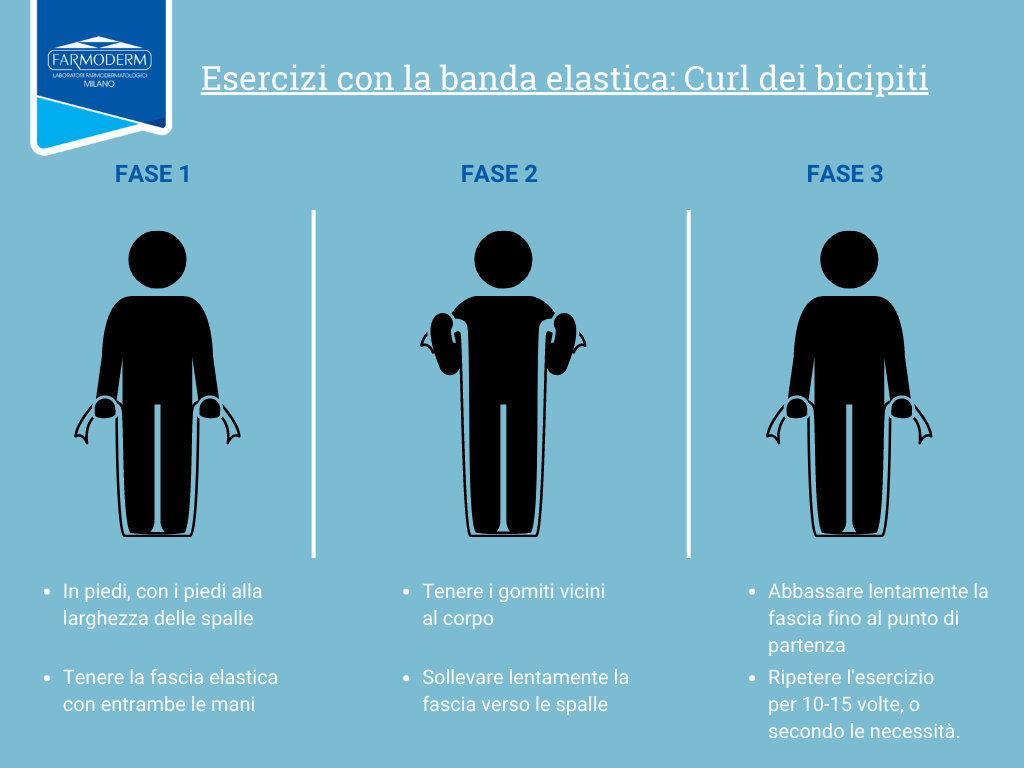
Exercise tips for seniors: biceps curl
2. Triceps thrusts with elastic band:
Rubber band triceps thrusts are a resistance exercise involving the triceps muscles and are particularly useful for older people as they can help improve arm strength and flexibility. This exercise is simple to perform and can be modified to suit the person’s physical abilities.
-
- Step 1: Grasp both ends of the elastic band with your hands and place your feet hip-width apart. This position allows for stable balance while performing the exercise and helps maintain proper posture. Keep arms close to the body and elbows bent at 90 degrees.
- Step 2: Slowly expand arms upward, keeping shoulders down and back straight. Hold the position for a second or two.
- Step 3: Slowly lower the arms to the starting position.
- Step 4: Repeat the exercise 10-15 times, or as many times as the elderly person feels comfortable.
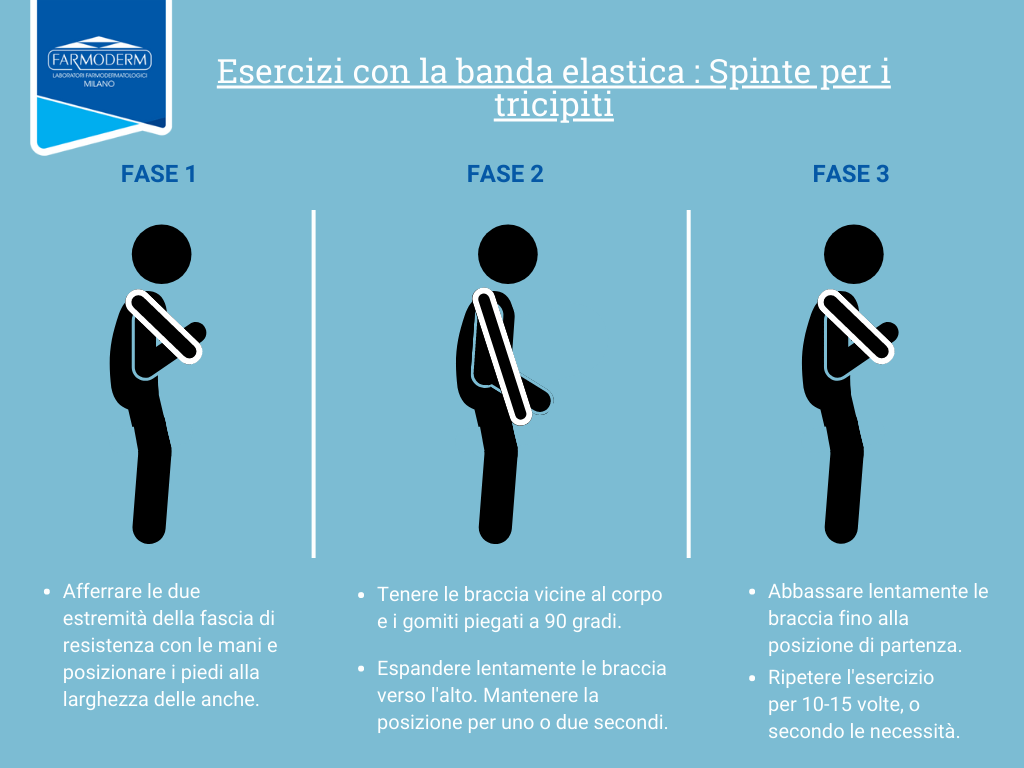
Exercise tips for seniors: Thrusts for triceps
3. Shoulder press:
This exercise involves pulling the elastic band up while lifting the arms overhead by extending the arms. It is a good exercise for older people because it helps improve overall upper body strength and improve posture, which can help reduce the risk of falls and increase mobility.
-
- Step 1: Standing with your feet shoulder-width apart, place the elastic band under your feet and grasp it with both hands.
- Step 2: Slowly lift the band up, straightening your arms and holding the band up to ear level.
- Step 3: Lower the band to the starting position, keeping the back straight and the body tense throughout the exercise.
- Step 4: Repeat the exercise 10-15 times, or as many times as the senior feels comfortable.
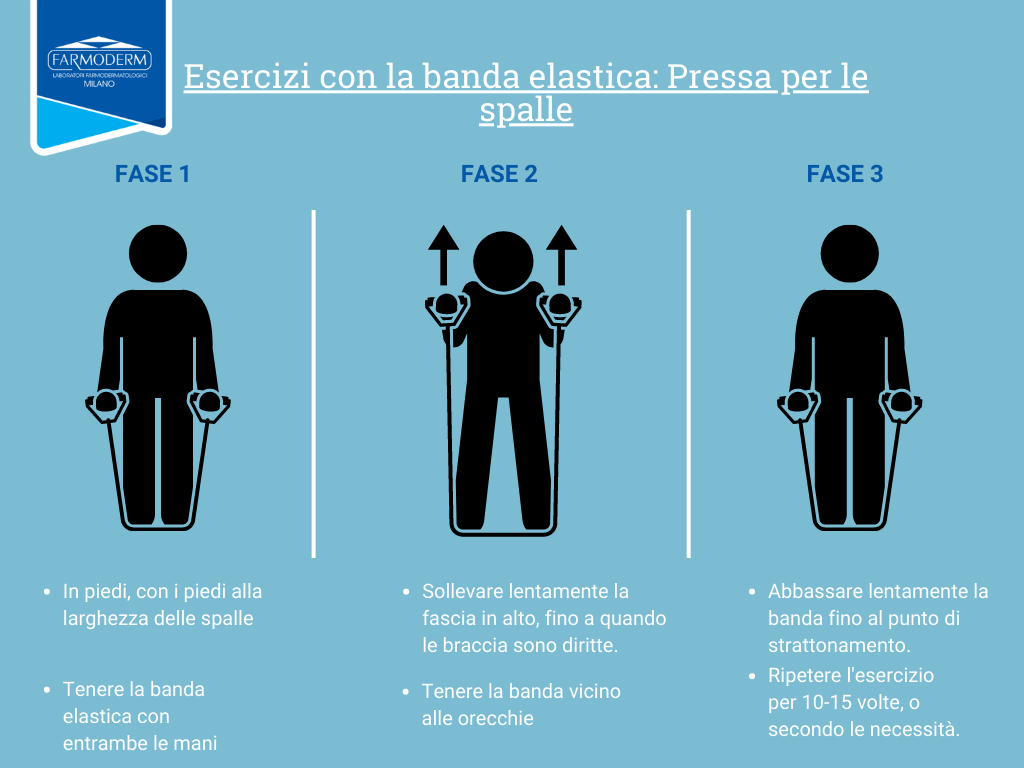
Exercise tips for the elderly: Shoulder press
B. Exercises with the chair
Many elderly people do not have equipment, such as weights or bands. In that case, a chair can be used for support during exercise. Caregivers can help the elderly do exercises such as chair squats, arm bends, and leg lifts.
Here are three exercises in the chair without tools that can be performed by older people with the help of an assistant:
1. Chair squats:
This exercise involves sitting on the edge of a chair or bench, standing up and then sitting down again. The chair squat is a good exercise for older people because it helps improve overall leg strength and can improve balance and stability, helping to reduce the risk of falls and increase mobility:
-
- Step 1: Have the elder sit on the edge of a chair with feet shoulder-width apart.
- Step 2: Caregivers can help the elderly person stand up, making sure to keep his or her back straight and knees behind the toes.
- Step 3: Caregivers can guide the elderly person to sit up slowly, making sure to keep his or her back straight and knees behind the toes.
- Step 4: Repeat the exercise 10-15 times, or as many times as the senior feels comfortable.
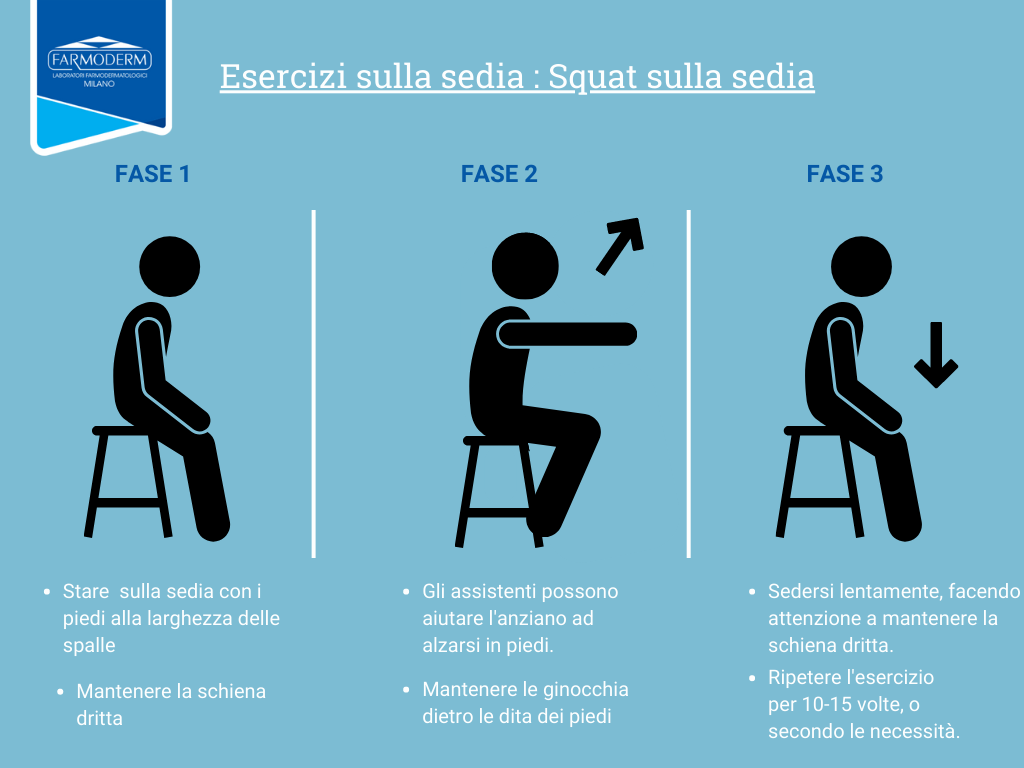
Exercise tips for the elderly: chair squats
2. Arm curl:
This exercise involves bending the elbow joint while holding the weight in the hand. The arm curl is a good exercise for older people because it helps improve upper body strength and muscle tone:
-
- Step 1: Have the elderly person sit on the edge of a chair with feet shoulder-width apart.
- Step 2: Caregivers can provide light dumbbells or food cans and guide the elderly person to hold them with palms facing forward.
- Step 3: Caregivers can guide the senior to do biceps curls, making sure to keep the elbows close to the body.
- Step 4: Repeat the exercise 10-15 times, or as many times as the senior feels comfortable.
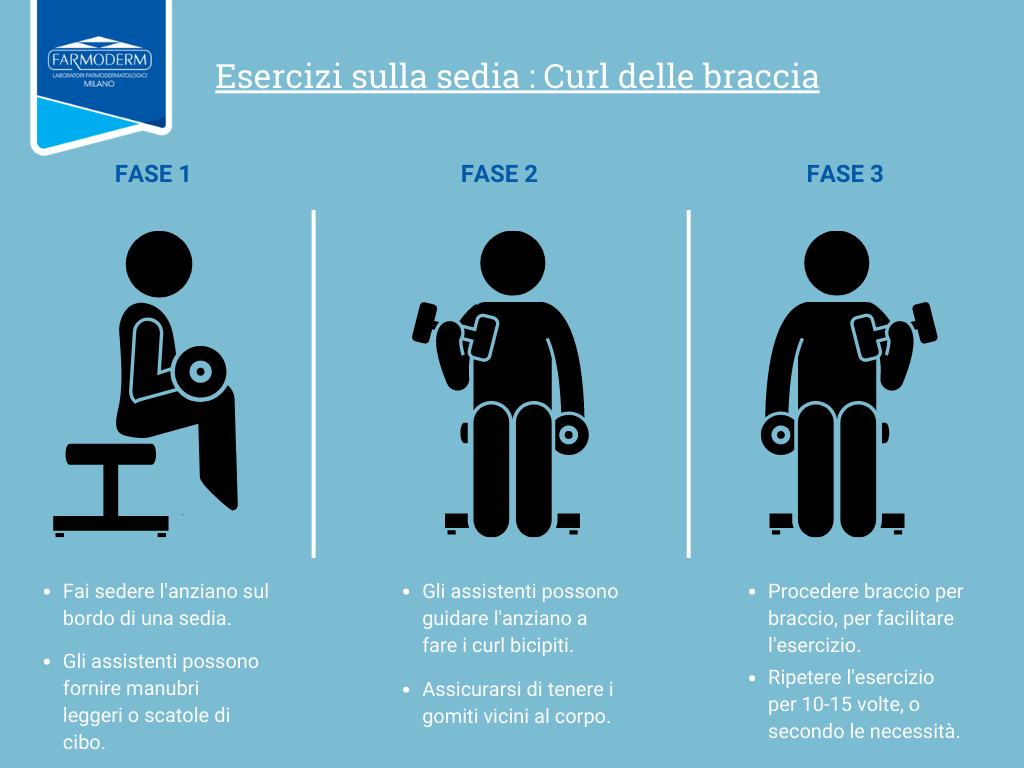
Exercise tips for the elderly: Arm curls
3. Leg lifting:
This exercise involves sitting on the edge of a chair or bench and lifting one leg at a time while the other leg helps maintain stability. It is a good exercise for older people because it helps improve overall leg strength and can improve balance and stability, helping to reduce the risk of falls and increase mobility:
-
- Step 1: Have the elder sit on the edge of a chair with feet shoulder-width apart.
- Step 2: Caregivers can help the elderly person lift one leg at a time, taking care to keep the back straight.
- Step 3: Caregivers can guide the elderly person to lower the leg.
- Step 4: Repeat the exercise 10-15 times, or as many times as the senior feels comfortable.
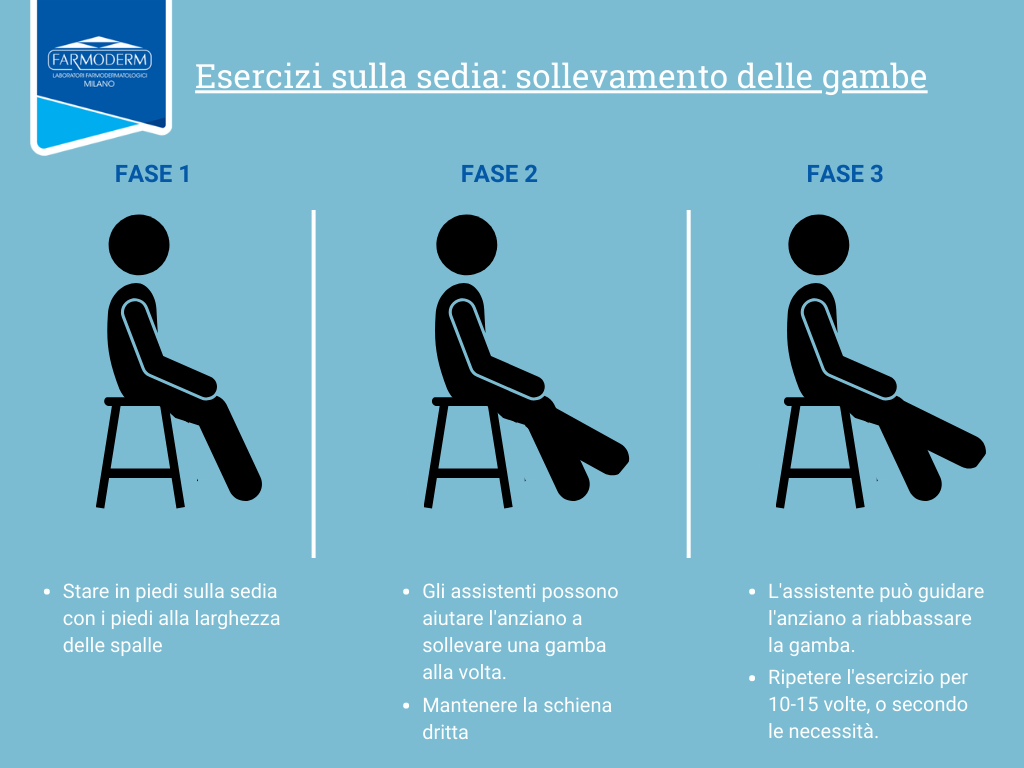
Exercise tips for the elderly: Leg lifts
II: Balance exercises
As always, it is important to consult a physician or physical therapist before starting a new exercise routine. It is important to note that these exercises should be performed under the supervision of an assistant to ensure safety, especially for the elderly with mobility or balance problems.
A. Heel and toe walking
Caregivers can help the elderly walk in a straight line, placing one foot in front of the other from heel to toe. This exercise helps improve balance and coordination.
In addition, the exercise can help flexibility and range of motion in the ankle, knee and hip joints. Heel-to-toe walking also helps cognitive function and reaction time, as it requires attention and concentration to maintain balance.
It is important to note that heel-to-toe walking requires a certain level of physical skill and must be performed under the supervision of an assistant to ensure safety.
B. Easy and basic stability exercises
1. Maintain balance with feet together:
-
- Step 1: Stand with feet together.
- Step 2: For safety reasons, have a chair at your side or in front of you.
- Step 3: Hold this position for 2 minutes, or less if you are not comfortable.
- Step 4: Repeat 2-3 times the exercise.
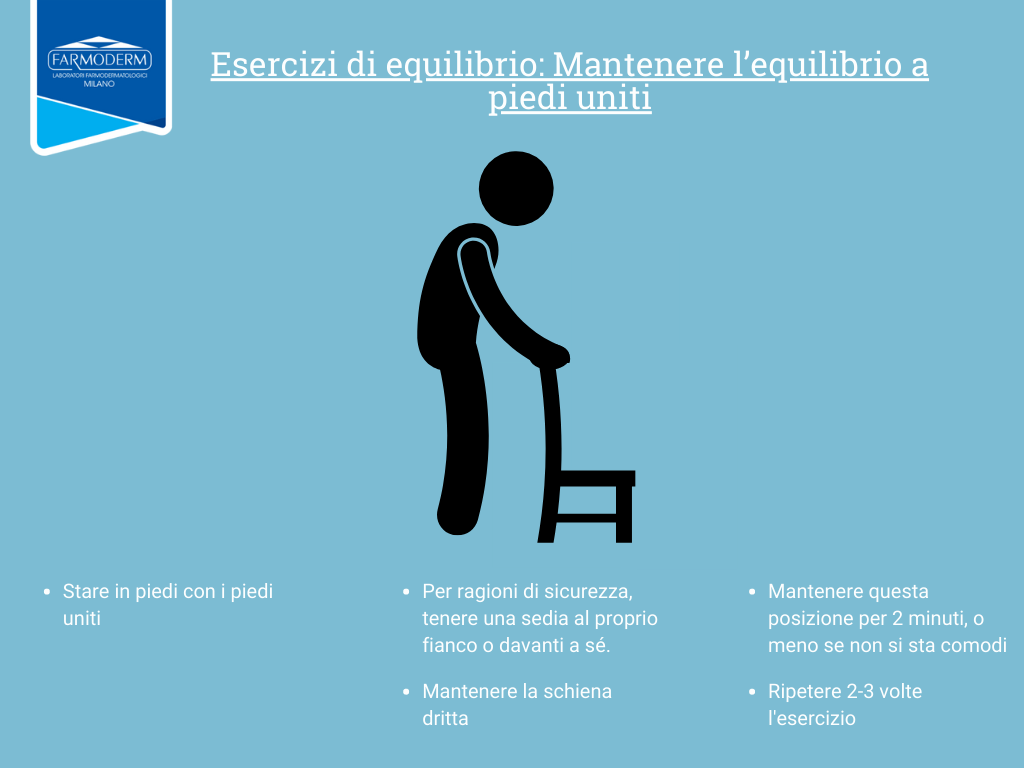
Exercise tips for the elderly: Maintaining balance with feet together
2. Tandem position:
-
- Step 1: Stand with an upright posture.
- Step 2: For safety reasons, hold a chair at your side or in front of you. Keep the big toe of one foot in contact with the heel of the other. Keep feet straight and not stretched out.
- Step 3: Hold this position for 1 minute on each leg, or less if you feel uncomfortable.
- Step 4: Repeat the exercise 2-3 times and don’t forget to alternate legs.
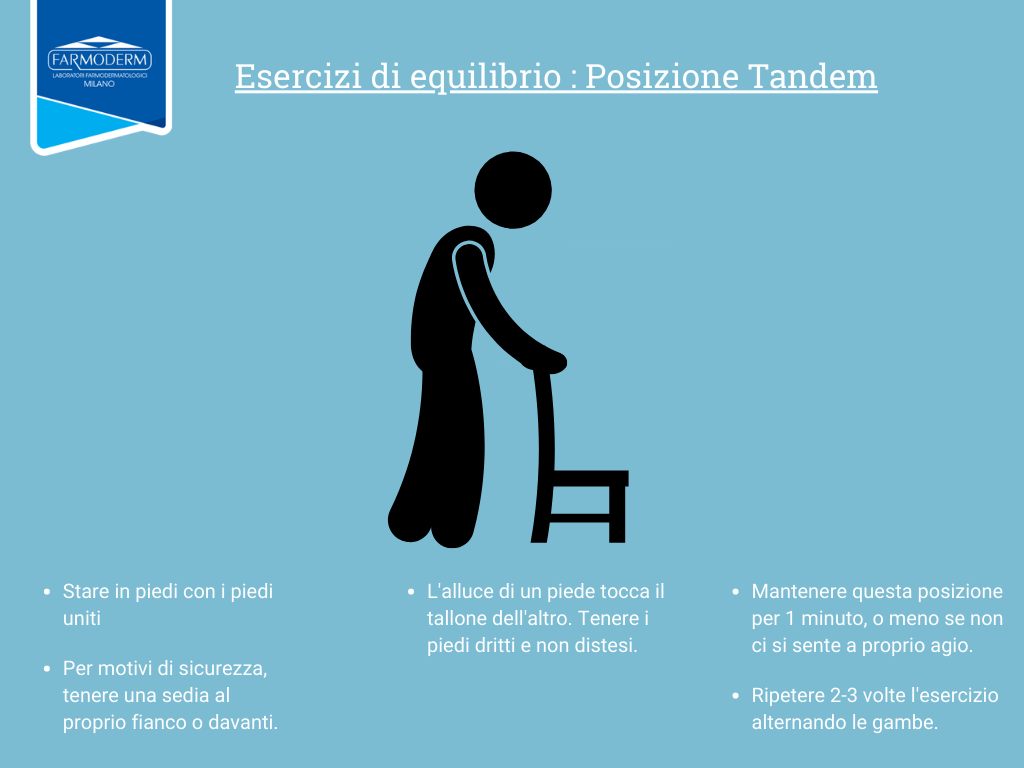
Exercise tips for the elderly: Tandem position
3. Keeping balance on one foot
This exercise is very difficult; be sure to master the previous exercises before trying it. It is a variation of the previous exercises dedicated to those who are comfortable with others.
-
- Step 1: Stand with an upright posture.
- Step 2: For safety, hold a chair at your side or in front of you. Shift your weight to one foot and lift the knee of the other leg, taking your foot off the ground.
- Step 3: Hold this position for 1 minute on each leg, or less if you feel uncomfortable.
- Step 4: Repeat the exercise 2-3 times, not forgetting to alternate legs.
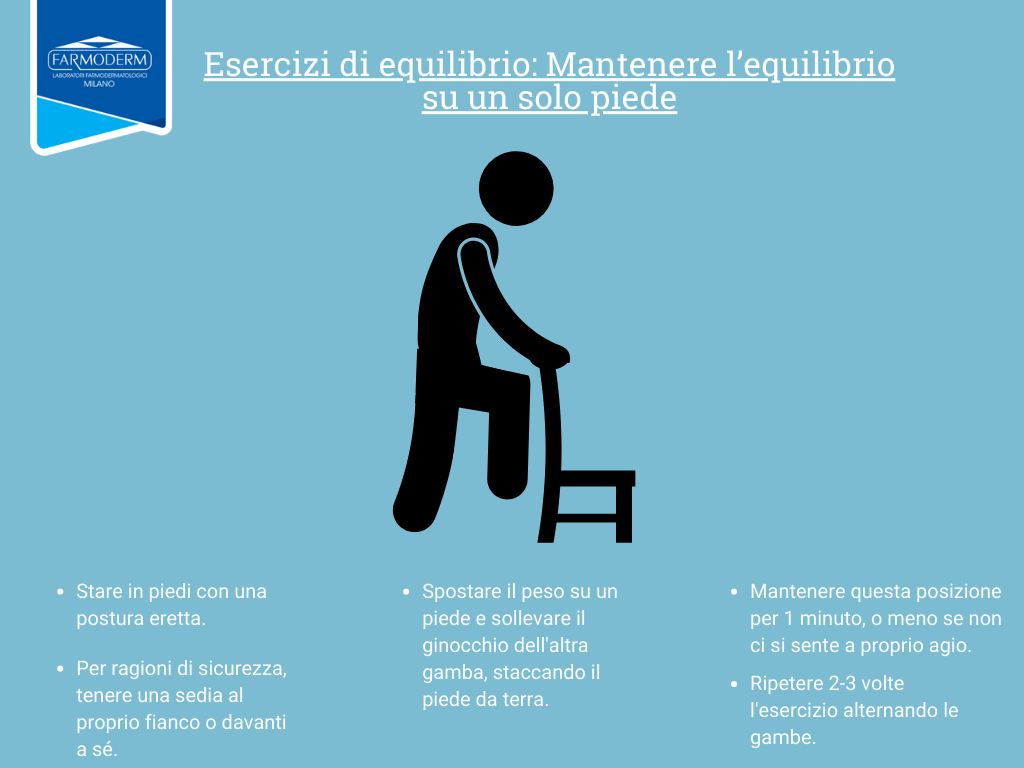
Exercise tips for the elderly: Keeping balance on one foot
III: Flexibility exercises
It is important to note that these exercises should be performed under the supervision of an assistant to ensure safety, especially for the elderly with mobility or balance problems. It is also important to start with a lower intensity and gradually increase over time, and to avoid any exercise that may cause pain or discomfort.
As always, it is important to consult a physician or physical therapist before starting a new exercise routine.
A. Yoga
Yoga is a great way to improve flexibility and reduce stress. Caregivers can help seniors assume the correct positions and maintain the poses.
Here are 3 yoga exercises suitable for the elderly that can be performed with the help of an assistant:
“The Stretching of the Cat and the Cow” 1.
-
- Step 1: Start by getting on your knees with your elbows resting on the ground at shoulder height.
- Step 2: Inhale deeply and arch your back, lift your chin and turn your gaze to the ceiling. This is the cow pose.
- Step 3: Exhale and round the spine, bringing the chin to the chest and pushing the sacrum toward the knees. This is the cat pose.
- Step 4: Repeat this movement 10-15 times.
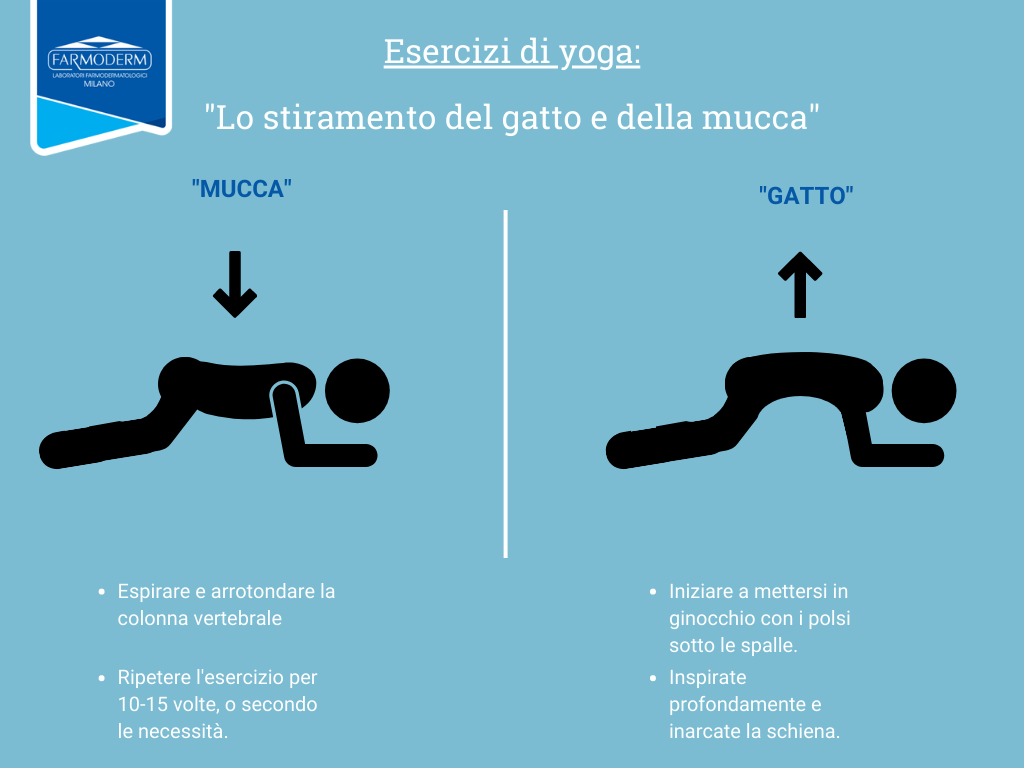
Exercise tips for the elderly: “Cat and cow stretching”
“The laying of the tree” 2.
-
- Step 1: Stand with feet together and lean firmly on the floor.
- Step 2: Slowly lift one foot and rest the sole of the foot on the inner thigh of the opposite leg.
- Step 3: Join hands above the head and focus on the breath.
- Step 4: Hold the position for 10-15 seconds, then release and repeat on the other side.
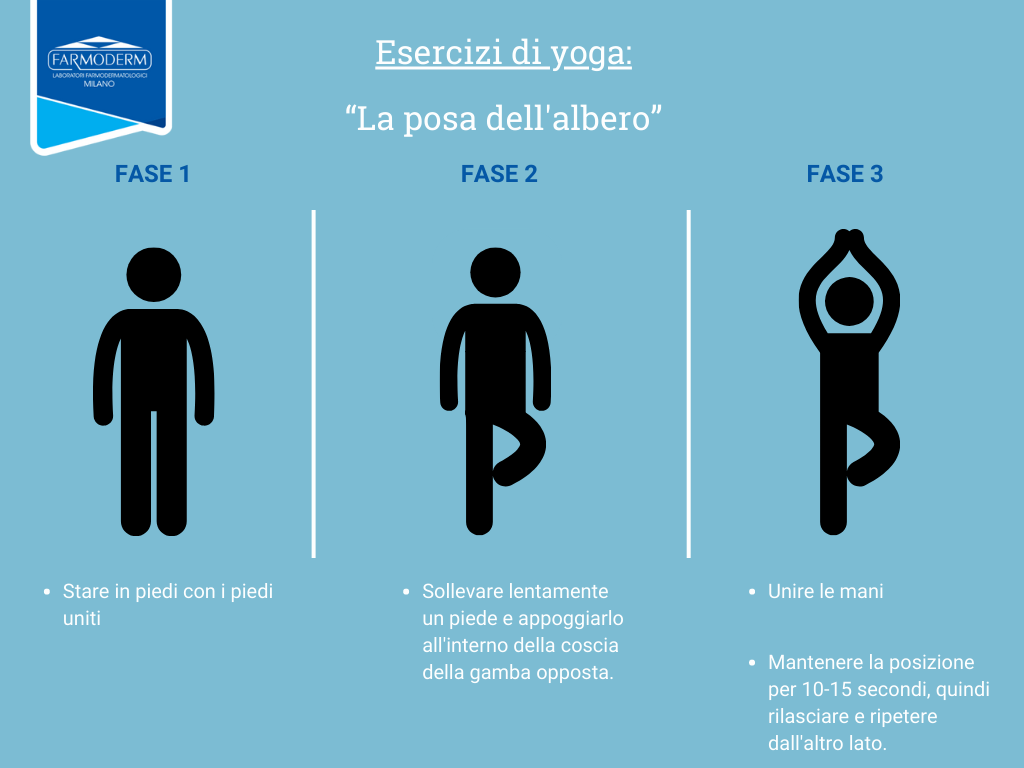
Exercise tips for the elderly: “Laying the tree”
3. “The sitting twist”
-
- Step 1: Sit in a chair with feet resting on the floor and spine straight.
- Step 2: Place the right hand on the back of the chair and the left hand on the right knee.
- Step 3: Perform a slow torso twist to the right, keeping the spine straight.
- Step 4: Hold the position for 10-15 seconds, then release and repeat on the other side.
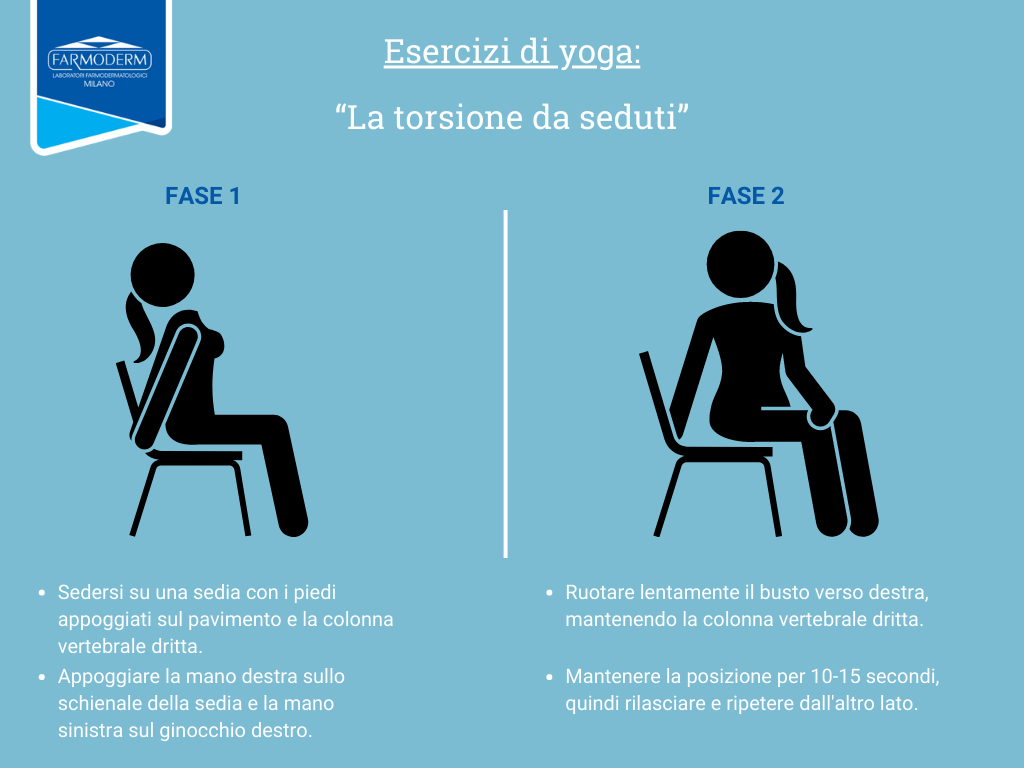
Exercise tips for the elderly: “The sitting twist”
B. Stretching
Caregivers can help the elderly stretch their muscles, improving flexibility and reducing muscle tension. It is important to note that these exercises should be performed under the supervision of an assistant to ensure safety, especially for seniors with mobility or balance problems.
It is also important to start with a lower intensity and gradually increase over time, and to avoid all stretches that cause pain or discomfort. As always, it is important that the elderly consult a physician or physical therapist before starting a new exercise routine, especially if they have complex health conditions or have been sedentary for a long period of time.
Here are 3 stretching exercises that are suitable for the elderly and can be performed with the help of an assistant:
1. The stretching of the lower limbs
-
- Step 1: Sit on the edge of a chair with your feet resting on the floor.
- Step 2: Keep your back straight and extend one leg in front of you, keeping your knee slightly bent.
- Step 3: Lean forward and stretch toward your toes, keeping your back straight.
- Step 4: Hold the stretch for 15-30 seconds, then release and repeat with the other leg.
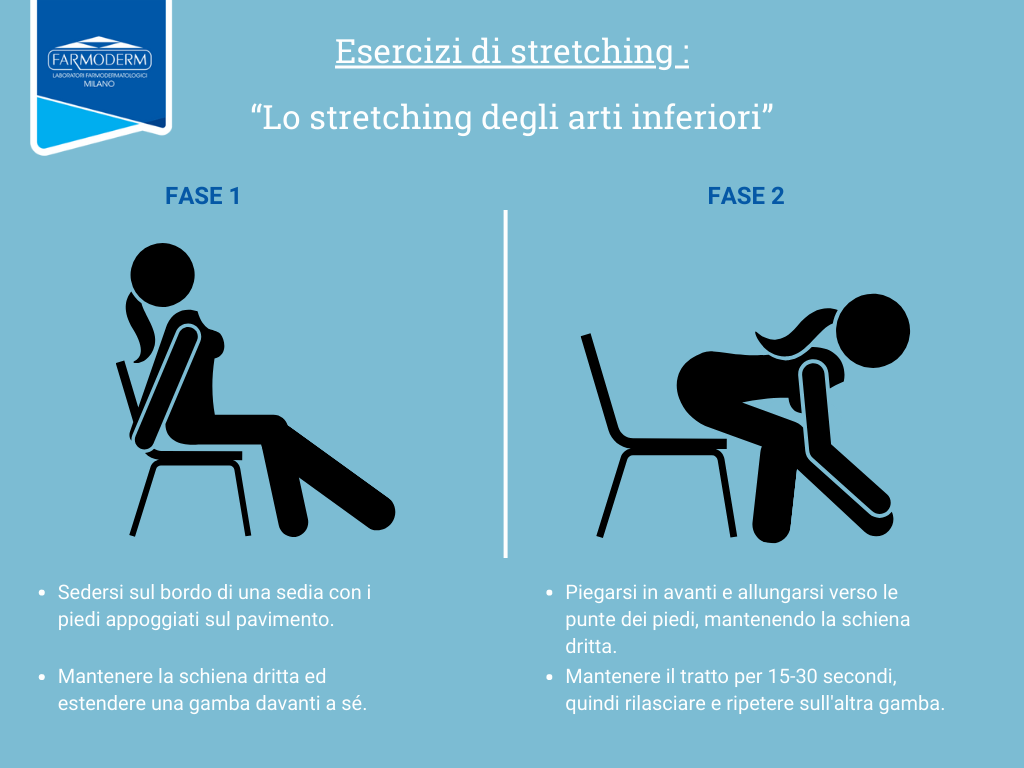
Exercise tips for the elderly: “Lower limb stretching”
2. Stretching for the shoulders and upper back
-
- Step 1: Standing with feet shoulder-width apart, back straight and arms along the sides.
- Step 2: Clasp your hands behind your back and straighten your arms, lifting them as high as possible.
- Step 3: Hold the stretch for 15-30 seconds, then release.

Exercise tips for the elderly: “Stretching for the shoulders and upper back”
3. The stretching of the neck
-
- Step 1: Sit in a chair or stand, with your back straight and your feet resting on the floor.
- Step 2: Slowly tilt the head to one side, bringing the ear toward the shoulder.
- Step 3: Hold the stretch for 15-30 seconds, then release and repeat on the other side.
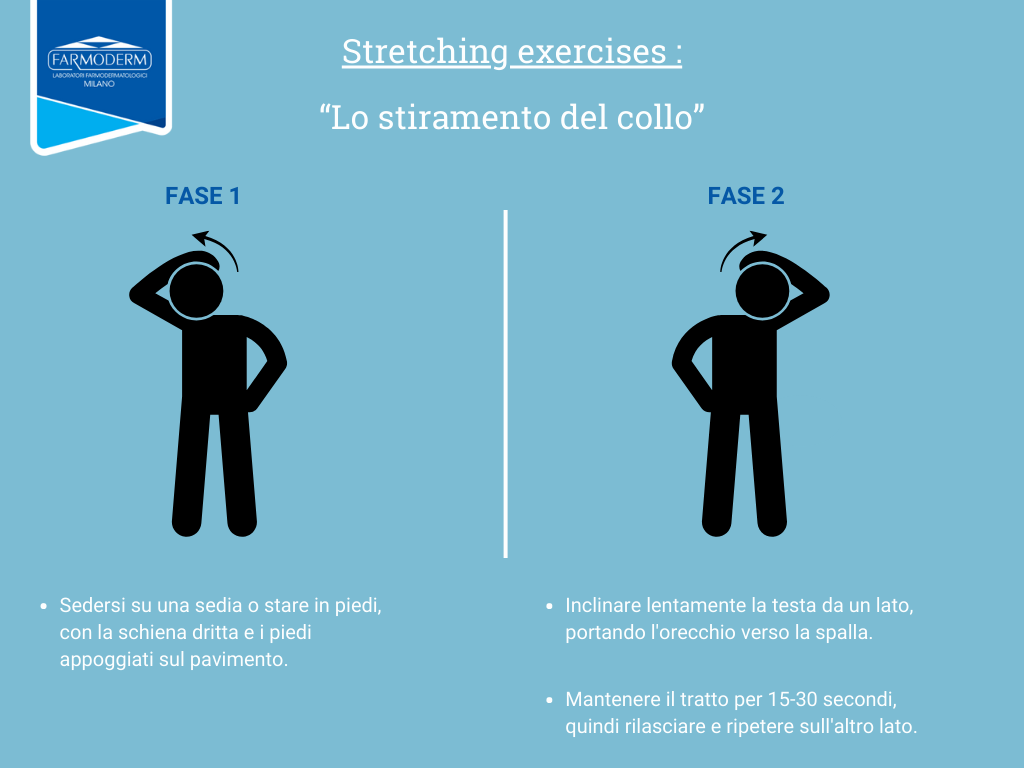
Exercise tips for the elderly: “Neck stretching”
To summarize
Physiotherapy exercises can be performed anywhere, anytime, with the help of an assistant, and can help improve the mobility, flexibility, and overall health of the elderly. The exercises described above target strengthening, balance and flexibility, with resistance bands, chair exercises, heel-to-toe walking, yoga and stretching.
In conclusion, engaging in physical activity and exercise with the assistance of a caregiver can have a significant positive impact on the mental and overall health of elderly loved ones. Regular physical activity can improve mood, decrease the risk of depression and anxiety, and improve cognitive function. It can also help reduce the risk of chronic conditions such as heart disease, diabetes and obesity.
In addition, regular physical activity can increase strength, flexibility and balance and improve overall physical function. Caregivers can play an important role in helping elderly loved ones stay active and healthy by providing guidance, support and encouragement. Therefore, it is important to incorporate physical activity and exercise as part of the care plan for elderly loved ones.
In general, it is important to remember that physical activity should be a positive and enjoyable experience for your elderly loved one. Be supportive, patient and encouraging, and work together to find activities that he enjoys and that are safe and suitable for his abilities.