
Have you ever had to deal with a stubborn elderly person who, even though it was clear they were in pain, refused medical assistance? We will show you how to deal with this obstacle and help you improve your communication skills to convince the elderly and get the help they need.
Before diving into a detailed and in-depth overview of useful tips, here is the answer you’ve been looking for:
To convince elderly people who refuse to be seen by a doctor, caregivers must communicate clearly and address their fears. Provide accurate information, involve them in decision making, respect their autonomy and be patient. Make them understand that seeing a doctor is important and that you will always stand by their side to support them.
Table of Contents:
I. Understanding the reasons for resistance
- Tip 1: Communicate clearly and empathetically
- Tip 2: Encourage them to ask questions
- Tip 3: Provide reassurance
- Tip 4: Offer emotional support
- Tip 5: Be patient
- Tip 6: Use distraction
- Tip 7: Involve them in decision making.
- Tip 8: Follow the process
1. Understanding the reasons for resistance
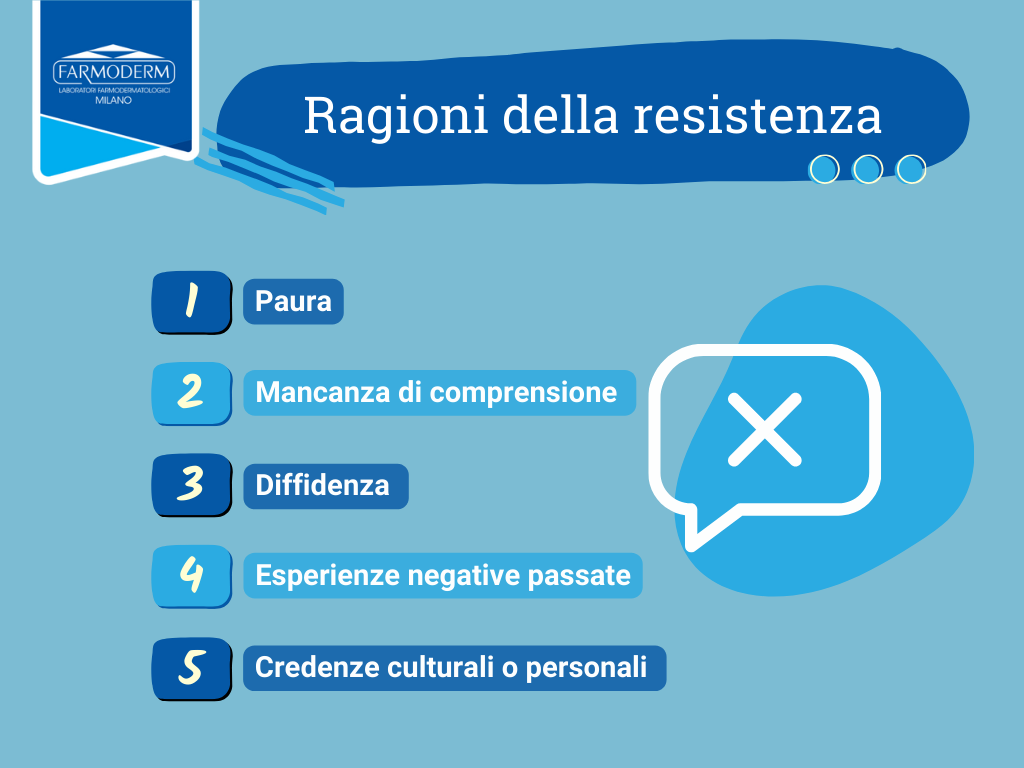
Understanding the reasons for resistance
Resistance to medical care can be a common problem for older people, especially if they are dealing with chronic diseases or have experienced a decline in their overall health. Understanding the reasons for resistance can help caregivers and health care providers better address the problem and develop effective strategies to overcome it.
One of the main reasons for resistance is fear. Many older people may fear the unknown and be anxious about potential side effects or risks associated with a particular treatment. They may also fear losing their independence or not being able to perform their daily activities.
Another reason for resistance is lack of understanding or distrust. Older people may need to fully understand the purpose or benefits of treatment and may be hesitant to proceed. They may also distrust the health care system or have had previous negative experiences with medical treatments.
In addition, resistance may also be related to cultural or personal beliefs. Patients may have cultural or personal beliefs that are incompatible with the treatment offered and may feel uncomfortable following it.
To understand the reasons for resistance, it is important to take the time to listen to the elderly person and understand his or her point of view. The physician and specialists also need to be aware of potential causes of resistance, such as fear, lack of understanding, past negative experiences, and cultural or personal beliefs, and be willing to address them with empathy and respect.
2. 8 Tips to help them
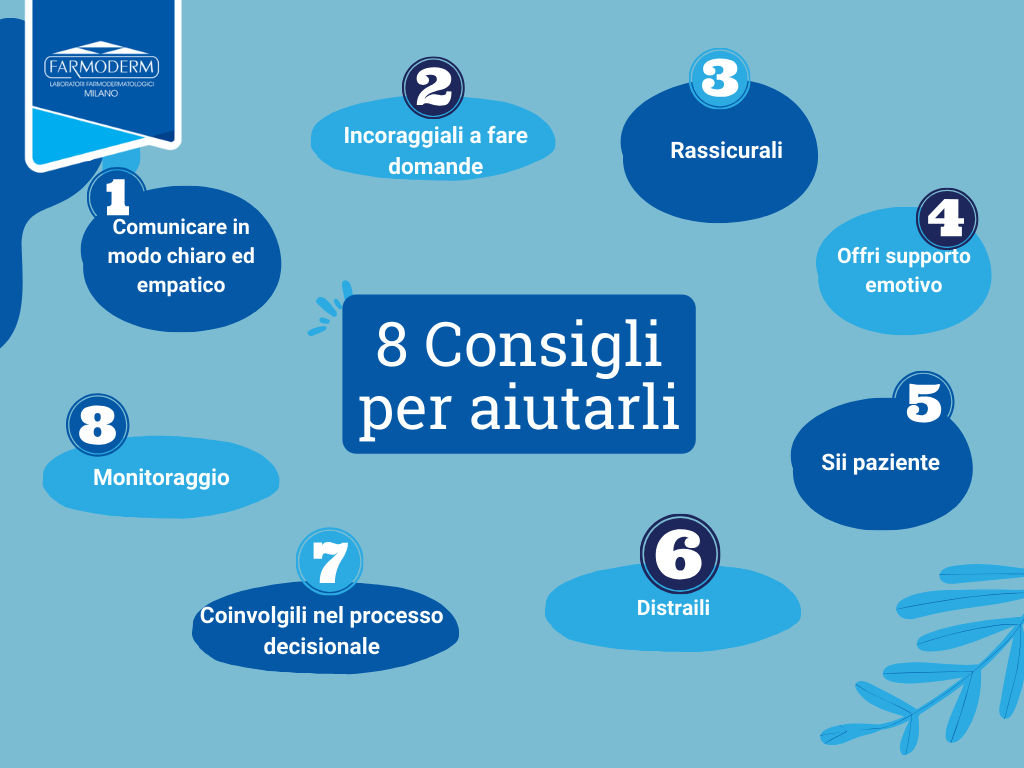
8 Tips to help them
Tip 1: Communicate clearly and empathetically
Clear communication is essential to build trust and understanding between the elderly and health care providers. This can help alleviate fears and concerns and make the elderly person feel more comfortable and willing to proceed with treatment.
Speak clearly
When communicating with the elderly, it is important to speak clearly and use simple, easy-to-understand language. The use of medical jargon or technical terms that might confuse or make the discourse excessive should be avoided. Instead, explain the purpose and benefits of the treatment in a way that is easy for the elderly person to understand.
Showing empathy
Empathy is also crucial when communicating with the elderly. Caregivers and caregivers must take into account the elder’s point of view and be willing to listen and understand his or her fears and concerns. By showing empathy, caregivers and caregivers can help build trust and make the elder feel more comfortable and willing to participate in care.
Tip 2: Encourage them to ask questions
Encouraging older people to ask questions about treatment can help alleviate fears and concerns by providing them with the information they need to understand the purpose and benefits of treatment.
Reassure them
Older adults may be hesitant to ask questions, for fear of seeming uncooperative or difficult. Caregivers and caregivers need to reassure them that it is natural to have questions and concerns and that they should feel comfortable asking any questions.
Being transparent
When answering questions, it is important to be honest and precise. Avoid giving vague or unclear answers and be willing to provide additional information if needed. By being transparent and providing accurate information, caregivers and caregivers can help alleviate fears and concerns and build trust in the older person.
Don’t forget the essentials
It is important to consider the elder’s cognitive abilities and limitations in hearing, vision, or mobility when answering questions. Some may have difficulty understanding or processing information, or they may not be able to see or hear correctly, so it is important to make the necessary adjustments.
Being respectful
In addition, it is important to consider the elder’s culture and beliefs when answering questions because they may have specific questions or concerns related to their cultural or personal beliefs.
Council 3: Provide reassurance
Reassurance can help alleviate fears and worries, making the elderly person feel more comfortable and confident in treatment.
Reassurance can take many forms, such as verbal reassurance that treatment will be beneficial and that the health care team is there to help, or physical reassurance through touch or a reassuring presence. It is important to keep in mind that the elderly person may have physical and emotional needs, and providing reassurance can help to meet them.
It is also important to provide reassurance about the safety of treatment. Many older people may fear the potential risks or side effects of treatment, and providing reassurance about safety can help alleviate these fears.
In addition, it is critical to provide reassurance about the impact of treatment. The elderly may be concerned about treatment and its potential impact on their daily lives and routines. Ensuring that their daily lives will be as normal as possible can help alleviate these fears.
It is also important to reassure them that they will be involved in the decision-making process and that their autonomy will be respected.
In summary, providing reassurance is an important step in helping older people overcome fear of medical care. Reassurance can take many forms, such as verbal reassurance, physical reassurance, and responding to concerns about safety, continuity of care, and autonomy. By providing reassurance, caregivers and caregivers can help alleviate fears and worries and make the elderly person feel more comfortable and confident in care.
Tip 4: Offer emotional support
Emotional support can play a crucial role in helping the elderly cope with the fear and anxiety associated with medical care.
Offer hope and optimism while acknowledging their concerns.
Offering hope and optimism is an important aspect of emotional support to help older people overcome fear of medical treatment. It involves acknowledging their concerns and fears while emphasizing the benefits and potential positive outcomes of treatment. It is important to be realistic and not downplay their concerns, but also to remind them of the resources available and the support provided. This can help alleviate fears and concerns and give the elderly person a sense of positivity.
Encourage them to express their emotions and validate their feelings.
Encouraging older adults to express their emotions and validate their feelings is an important aspect of emotional support. It involves creating a safe space to share their concerns and fears and actively listening to them without judging or interrupting them. By validating their feelings, caregivers and caregivers show that they understand and empathize with the elderly person, making them feel heard and understood. This can help alleviate fears and worries and make the elderly person feel more comfortable and confident in treatment.
Be available to talk, listen and offer support when needed.
Being willing to talk, listen and offer support when needed is an important aspect of emotional support. It involves being present and attentive to the elder’s needs, whether it is listening, encouraging or simply being there. This can help alleviate fears and worries and give the elderly person a sense of comfort and security. It is important to let the elder know that they can turn to you whenever they need you and that you will be there to support them.
Involve family members or close friends for additional emotional support.
Involving family members or close friends for additional emotional support is an important aspect of helping the elderly overcome the fear of medical care. These people often have valuable insight into the elder’s concerns and fears and can provide additional emotional support and comfort. Involving them in the process can also help ensure continuity of care and provide additional support for the elderly person after treatment. It is important to involve them in the decision-making process and respect the elder’s autonomy and privacy.
Help create a positive environment that promotes comfort and safety.
Helping to create a positive environment that promotes comfort and safety is an important aspect of emotional support. It involves creating a warm and welcoming space in which the elderly person feels safe and comfortable. This can be achieved by providing a clean, well-lit and comfortable environment. It is also necessary to provide an appropriate level of privacy and respect the elderly person’s personal space. In addition, it is important to provide a sense of normalcy and routine, which can be achieved by maintaining the elderly person’s daily routine as much as possible. This can help alleviate fears and worries and provide a sense of comfort and security for the elderly person.
Help the person get in touch with support groups or counseling services, if needed.
Helping the elderly person connect with support groups or counseling services, if needed, is an important aspect of emotional support. It involves identifying the need for additional support and providing access to resources that can help the person deal with his or her fears and concerns. Support groups provide a platform to share experiences and offer mutual support and understanding. Counseling services provide professional help and guidance to address the person’s specific needs. These services can help alleviate fears and concerns and provide a sense of comfort and security for the elderly person. It is important to respect the elder’s autonomy and make sure that he or she is comfortable with the idea of getting in touch with support groups or counseling services.
Tip 5: Be patient
Being patient is important when offering care to elderly, who may need more time to process information, adjust to the idea of the medical treatment and make decisions.
Being patient means giving the elderly person time to express his concerns and fears and to ask questions. It also means not rushing him to make a decision about treatment and allowing him time to reflect and make a decision with which he feels comfortable.
It is also important to be patient with the elder’s physical and cognitive abilities. Many elderly people may have difficulty understanding or processing information or be slower in making decisions because of cognitive decline. With patience and understanding, caregivers and caregivers can help alleviate fears and concerns and make the elder feel more comfortable and confident in treatment.
In summary, being patient is an essential step in helping the elderly overcome the fear of medical care.
Tip 6: Use distraction
Distraction can be a useful tool to help the elderly cope with the fear and anxiety associated with medical care. There are several types of distraction that we can offer to the elderly. Some examples are:
Listening to music
Listed below are 5 songs that are known for their calming and soothing properties and can be used as a distraction during medical treatment for the elderly. These songs can help create a sense of calm and relaxation and take the mind off treatment.
“Weightless” by Marconi Union
This song has been scientifically proven to reduce stress and anxiety by 60 percent by creating a sense of calm and tranquility. The song features a specific tempo, harmonies and bass lines that work together to slow the heart rate and lower blood pressure.
Link: Marconi Union – Weightless (Official Video)
“Mozart’s Lullaby” by Brahms
This classic lullaby is soothing and gentle and can help create a sense of calm and relaxation. The melody is simple and repetitive, which can be helpful for the elderly who have difficulty concentrating.
Links: Lullaby Mozart: Classical Music for Children, Music for Sleeping Children, Children Songs
“Somewhere Over the Rainbow” by Israel Kamakawiwo’ole.
This version of the classic song is upbeat and optimistic and can help create a sense of hope and positivity. The ukulele and Hawaiian-style singing can also provide a sense of cultural sensitivity and comfort.
Link: OFFICIAL – Somewhere Over the Rainbow 2011 – Israel “IZ” Kamakawiwo’ole
Louis Armstrong’s “What a Wonderful World.”
This song is upbeat and optimistic and can help create a sense of hope and positivity. The lyrics speak of the beauty of nature, which can be a relaxing distraction for the elderly.
Link: Louis Armstrong – What A Wonderful World (Official Video)
Eric Clapton’s “Tears in Heaven.”
This song is a classic, emotional ballad that can help create a sense of comfort and security. The melody is soothing and the guitar sound is gentle, and can give a sense of warmth and comfort.
Link: Eric Clapton – Tears In Heaven (Official Video)
Reading
“The Old Man and the Sea”
This is a novella by Ernest Hemingway, published in 1952. The story tells of Santiago, an aging fisherman who has gone 84 days without catching a fish, and his struggle against a giant marlin. It is a powerful story about perseverance, determination and the human spirit. The book tells in a simple but profound way about one man’s struggle against the elements and his own limitations and the relationship between the old man and the sea.
“The Secret Garden”
This is a novel by Frances Hodgson Burnett, first published in 1911. The story follows Mary Lennox, a young girl who, after the death of her parents, is sent to live with her uncle in bleak England. She discovers a hidden garden that has been closed for years and, with the help of her cousin Colin and a local boy, Dickon, brings the garden back to life and, in the process, helps Colin recover from his illness. The story is a timeless classic, with themes of love, loss and the power of nature to heal, and is a great diversion for older adults who enjoy reading and reminiscing about their childhood.
“Where the red fern grows.”
It is a novel by Wilson Rawls, published in 1961. It is the story of a boy named Billy who lives in the Ozarks and dreams of owning a pair of hunting dogs. The novel tells the story of his journey to set aside enough money to buy the dogs, and the adventures and challenges he faces with them as he learns about the responsibilities and rewards of owning and training dogs. It is a moving and nostalgic story of a boy and his dogs, set in the Ozarks, and can be a great distraction for older adults who enjoy reading and reminiscing about their childhood.
Watching movies or television programs
Watching television programs or movies can be an excellent distraction for the elderly who are able to see and hear. They allow them to entertain themselves and take their minds off treatment. It is important to choose the right shows or movies suited to the elderly person’s cognitive abilities and interests.
In addition, it is also important to consider the elderly person’s mobility limitations: if he cannot move around too much, watching a movie or TV program on a tablet or laptop might be more comfortable for him.
Games or puzzles
Playing games or doing puzzles can be a great distraction for the elderly who are able to engage in such activities. They allow them to focus on something else and take their minds off treatment. It is important to choose games or puzzles suited to the elderly person’s cognitive abilities and interests.
For example, if the elderly person likes word puzzles, he might enjoy doing crossword puzzles or Sudoku, while if he likes matching games, he might enjoy playing memory or matching cards. Playing or doing puzzles can also help stimulate the mind and keep it active, which can be helpful in maintaining cognitive function.
Mindfulness or meditation
Mindfulness or meditation can be an excellent distraction for older people who are able to practice these activities. It allows them to focus on the breath and take their minds off treatment. Mindfulness and meditation can also help reduce stress and anxiety and improve overall well-being. It can be useful for the elderly who have difficulty sleeping or are dealing with chronic pain.
For seniors new to mindfulness and meditation, it is important to start with simple techniques such as deep breathing exercises or guided meditations designed specifically for seniors. Many apps and websites are available that offer free resources and guidance to help seniors get started with mindfulness and meditation. It is important to consider the elder’s cognitive abilities and mobility limitations when choosing a mindfulness or meditation technique.
There are many free websites available that offer resources and guidance for mindfulness and meditation for the elderly.
Tip 7: Involve them in decision making.
Involving the elderly in decision-making can help alleviate fears and worries, making them feel more in control of the situation.
It is important to provide the elderly person with accurate and relevant information about treatment options and explain the benefits and risks of each option. This will help the elderly person make an informed decision about the treatment best suited to his or her needs.
It is also important to respect the elderly person’s autonomy and his or her right to make decisions about his or her own care. This means allowing the elderly person to make the final decision about treatment, even if it differs from your opinion.
Tip 8: Follow the process
Following up with the elderly person after treatment can help ensure his or her well-being and address any lingering fears or concerns.
It is important to check in with the elderly person to see how he or she is doing and address any problems or concerns he or she may have about treatment or recovery. This can help alleviate any fears or concerns and ensure that the elderly person is comfortable and confident in his or her recovery.
It is also important to provide the elderly person with information about any follow-up care or treatment that may be needed and to explain the purpose and benefits of such care. This will help the elderly person understand the importance of follow-up care and feel more comfortable and confident in his or her recovery.
In addition, it is also important to involve close family members or friends in the monitoring process, who can provide additional support and valuable insight into the elder’s concerns and fears.
In summary, follow-up is an important step in helping the elderly person overcome the fear of medical treatment. Following up with the elderly person after treatment can help ensure his or her well-being, address any lingering fears or concerns, provide information about follow-up care, and involve family members or close friends in the process. By following up with contacts, caregivers and health care providers can help alleviate fears and concerns and make the elderly person feel more comfortable and confident in his or her recovery.
What the caregiver can do if the elderly person continues to refuse to see a doctor or go to the hospital
If your loved one continues to refuse to see a doctor or go to the hospital, you may need to consider seeking outside help. In this case, a primary care physician, geriatric care manager or social worker can be contacted. These can help you navigate the health care system and find resources to help your loved one.
If you are unable to convince your loved one to see a doctor, you may also consider appointing a legal guardian. This will give you the legal authority to make health care decisions on behalf of your spouse.
In some cases, professional help, such as counseling or therapy, may be needed to help your loved one overcome his or her fears and concerns about seeking medical care.
Ultimately, as a caregiver, it is important to be patient, understanding and supportive when your loved one is reluctant to seek medical attention. With time and patience, you can help him or her overcome their fears and receive the medical care they need. It should be remembered that your loved one’s health and well-being is the most important thing, and it is essential to advocate for the person and his or her needs.
3. Conclusion
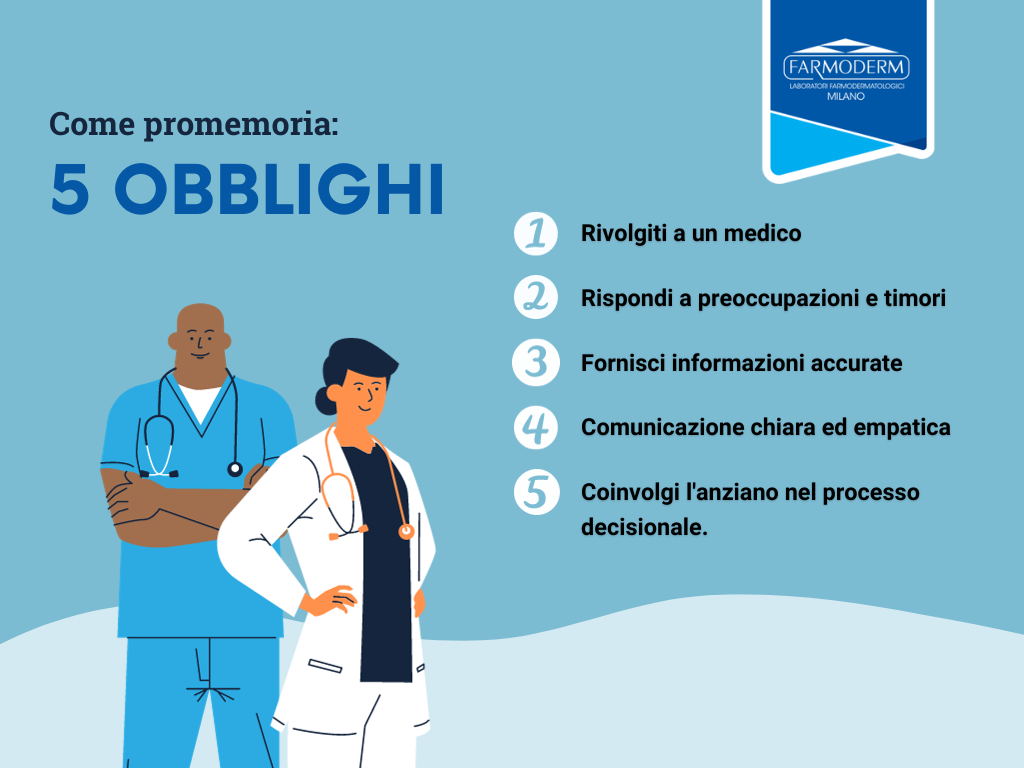
Helping the elderly overcome their fear of medical care can be a challenging task, but it is critical to their well-being. It is important for caregivers to understand that the elderly may have different perspectives and may be hesitant to seek medical care.
Therefore, a personalized approach that takes into account the individual’s needs, beliefs, and preferences is essential. Caregivers must use clear and empathic communication, address their concerns and fears, and provide accurate information about treatment options. It is important to involve the elderly person in the decision-making process, respect their autonomy, and be patient.
Helping older people understand the importance of seeking medical care and supporting them during the process can help alleviate their fears and concerns. It is important to remember that each older person is unique and that a personalized approach is the key to success in helping them overcome their fear of medical care.