
As a person grows older, he or she may lose the ability to take complete care of himself or herself.
Physical restrictions, illness, lack of energy or simple lack of interest. All these can lead to poor hygiene in the elderly. The situation worsens when they refuse assistance from family members or caregivers. This is understandable, however, since hygiene is something very personal, so it is essential to be patient with them.
When caring for a bedridden elderly person, effective daily hygiene is super important. This is because poor hygiene can lead to physical problems, thus skin irritation and infection as well as feelings of discomfort and embarrassment that arise in these very delicate situations.
Perfect daily hygiene for dependent elderly and bedridden patients can consist of 7 key steps:
|
Although every caregiver has his or her own routine for caring for bedridden elderly people, these 7 steps are almost always involved.
By following these steps, you can ensure that the person always feels clean and fresh. It is, of course, possible to adapt the routine to their specific needs since many older people can still maintain a degree of self-dependence.

Image 1: Elderly woman in wheelchair happy with a caregiver
Importance of personal hygiene in elderly patients
You may be wondering why we are focusing so much on personal hygiene. First of all, taking care of one’s body is an essential part of our daily routine; it is something we all do normally without thinking too much about it.
The lack of it, due to a variety of factors, can be very troublesome and cause numerous problems both physical and psychological, even more so in the delicate period we are living in.
That said, good hygiene is even more essential in elderly patients. Here are some of the benefits of a healthy hygiene routine:
- Preserves mental health: Poor hygiene is very troublesome. An elderly person who is unable to keep up with his or her own hygiene needs feels it. Especially when the elderly person is bedridden and cannot take care of himself there is a risk of developing feelings of frustration. The person may fall into a cycle of self-neglect, low self-esteem, loss of dignity, shame and consequently depression. This is one of the main reasons why you should make sure that your elderly loved one always feels clean and fresh.
- Prevents disease: It goes without saying, but maintaining good hygiene keeps you safer from possible infection and disease.
- Prevents painful conditions: In elderly patients, skin tends to be more fragile and dehydrates easily. Poor hygiene in elderly patients can lead to skin cracking, infection, skin irritation and pain. Effective daily hygiene is important to ensure a sufficient quality of life.
- Allows them to socialize better: Bad odors and poor visible hygiene can sometimes make it complicated to socialize with other people, even family members themselves. By helping your loved ones take better care of their bodies, you will make their relationships markedly better.
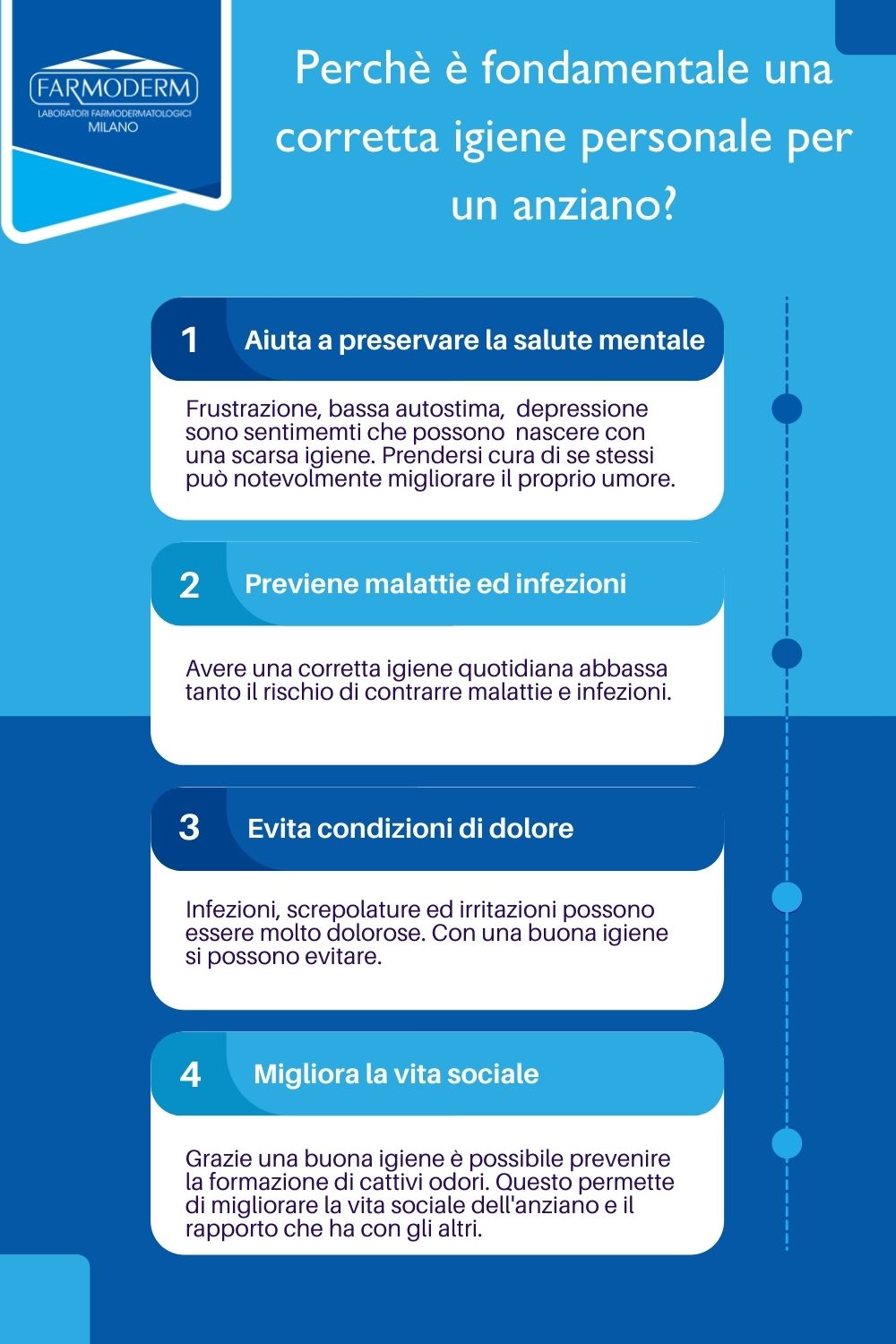
Infographic 1: The importance of proper daily hygiene in the elderly.
The 7 steps for perfect daily hygiene in the elderly
To have effective daily hygiene, it is good to follow well-established steps. How many of these cleaning steps are necessary depends on how dependent the caregiver is. A person with dementia who is bedridden will need a comprehensive care plan. An elderly parent who can walk, on the other hand, may need help with only a few minor things.
1: The bed bath
Bed bathing is a central part of any hygiene plan for the elderly or bedridden people. Older people and those who may have physical restrictions are often afraid to bathe themselves or simply cannot do so. It is essential to help them wash daily so that their bodies remain clean and healthy.
A bed bath is the best alternative for those who cannot provide it themselves. So, as a caregiver, how can you make an effective bed bath? Here are some tips:
- Stick to the patient’s routine. Does he like to shower before lunch? Then we’ll do that, but with a bed bath.
- Keep 3-4 towels next to you.
- Use for hygiene only disposable cloths specifically for sensitive skin
- Keep two jugs available, one for water with soap and one for rinsing as well as a basin to collect water when washing feet.
- Always clean your hands before and after starting and use an antibacterial sanitizer .
- Place a waterproof sheet under the person.
- Use a soap specifically for fragile and sensitive skin.
- To wash your head, if you are not too handy, better to use a shampoo cap
- Complete the bath with a body lotion.
- Use moisturizing creams. These can keep the skin hydrated, counteracting the effect of prolonged bedtime. Water and soap alone can lead to dry and cracked skin.
- Use emollient oils to promote cell regeneration and prevent cracked skin.
- Use a specific deodorant for lasting freshness.
A bed bath will make the elderly feel fresh and clean. It will prevent conditions related to poor self-care, such as skin conditions, irritation and infection. It will also help the caregiver feel better about themselves and their bodies.
We recommend this type of hygiene once or twice a week.
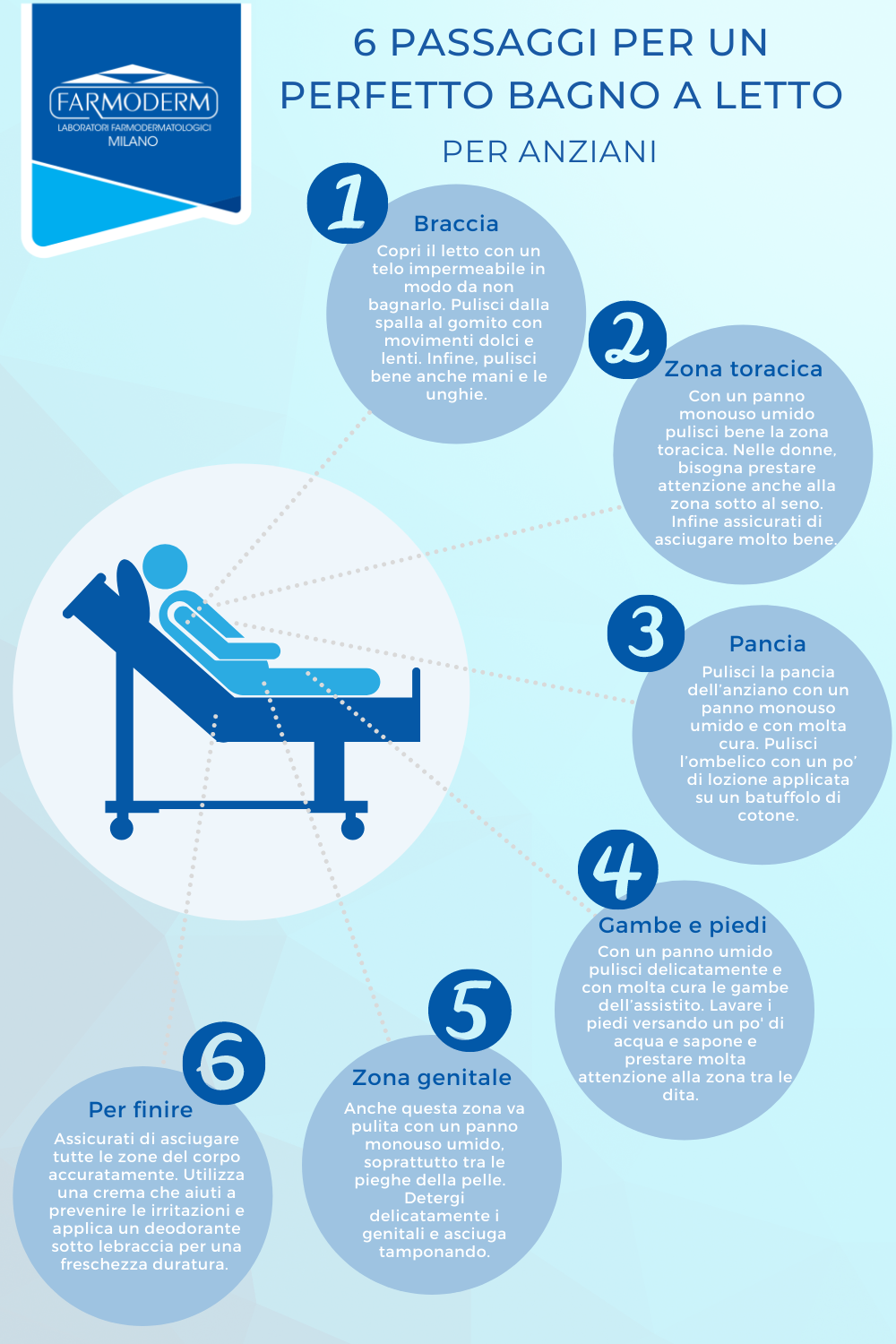
Infographic 2: Six steps for perfect bed bathing in the elderly
Steps for a good bed bath
If you are not sure how to perform a bed bath, follow these steps and improve your technique as you go:
- First, make sure the water you are using is lukewarm.
- Start by washing the forehead, cheeks, nose and neck with a disposable cloth soaked in specific soap and water. Apply gentle pressure and be sure to get between the folds of the skin, because dirt can collect there very easily.
- A specialized protective cream can be used to keep the skin hydrated and well nourished.
Arms:
- Start by putting a towel under your arms to avoid wetting the bed.
- Support the patient’s arm with the palm of the hand under the elbow.
- Clean from shoulder to elbow in gentle, slow motions using a disposable cloth soaked in specific soap and water. Don’t forget to clean the underarm area!
- Wash the caregiver’s hands with the jug of soap and water. Used water can be collected in a basin, but it is easier to use a disposable cloth soaked in specific soap and water.
- Once the arms and hands are clean and dry, a cotton swab can be used to clean under the nails.
Thoracic area:
- Use a disposable cloth soaked in specific soap and water. Be sure to clean the area under the breast in women, as germs and dead skin can collect there and cause irritation.
- Be sure to blot and dry perfectly with a soft towel.
- Consider using a scented lotionto nourish the skin and keep it fresh longer.
Belly:
- You should clean it the same way as the chest area.
- Clean the navel with some lotion applied on a cotton ball.
Legs:
- Bend the knee upward, hold it with one hand and use the other to wipe with a damp cloth.
- Dip the feet in a basin and pour some water and specific soap to wash them, making sure to wash well between the toes.
- Dry the area between the toes very well to avoid fungal infection.
- Use a cotton swab to clean under the toenails. It is always best to keep nails short especially for people with diabetes.
- Consider using an anti-odor cream with a strong emollient effect.
Genital area:
- Be sure to clean well with a disposable cloth soaked in specific soap and water. especially the folds of the leather.
- For uncircumcised men, pull the foreskin back, rinse and dry. Don’t forget to bring the foreskin back forward.
- For females, spread the outer lips and wash thoroughly.
To finish:
2: Oral and dental hygiene
Good oral and dental hygiene prevents microbes from accumulating, causing:
- Fungal infections
- Bad smell
- Gum disease
- Tooth decay
- Dry mouth
- Lingering bad taste
One aspect to be particularly considered is that most elderly people use dentures, so applying proper oral hygiene could be quite complicated. These are the main steps to follow:
- Having the mouth rinsed
- Remove the upper denture by grasping the incisors with thumb and forefinger and pressing upward and outward
- Remove the lower denture by grasping the incisors with thumb and forefinger and making upward rocking movements
- Brush the denture with warm water and toothpaste removing dirt and adhesive paste residue
- Place the denture in an appropriate container with warm water and an effervescent tablet
- Clean the gums and linga using one of the following options: toothbrush and toothpaste; swab and mouthwash; gauze and mouthwash;
- Reposition the denture by securing it with adhesive paste
Mouth cleansing in disabled patients is especially necessary if they are taking medications with an unpleasant aftertaste. There are many mouth care products to consider, such as:
- Antiseptic mouthwash – to kill germs
- Periodontal serum – for oral health and nourishment
- Vitamin “E” complex oral spray – effectively counteracts oxidative stress
- Total Protection Toothpaste – Protection and repair of teeth and gums.
- Anti-plaque toothbrush – Cleans and prevents irritation
As a caregiver, you should help your caregiver clean the mouth after each meal, or at least twice a day. Brush the teeth, floss and rinse making sure that no food particles are left behind that can cause problems.
Some elderly people may be able to handle these tasks on their own if you bring them a toothbrush, toothpaste, floss, water and a saliva bucket.
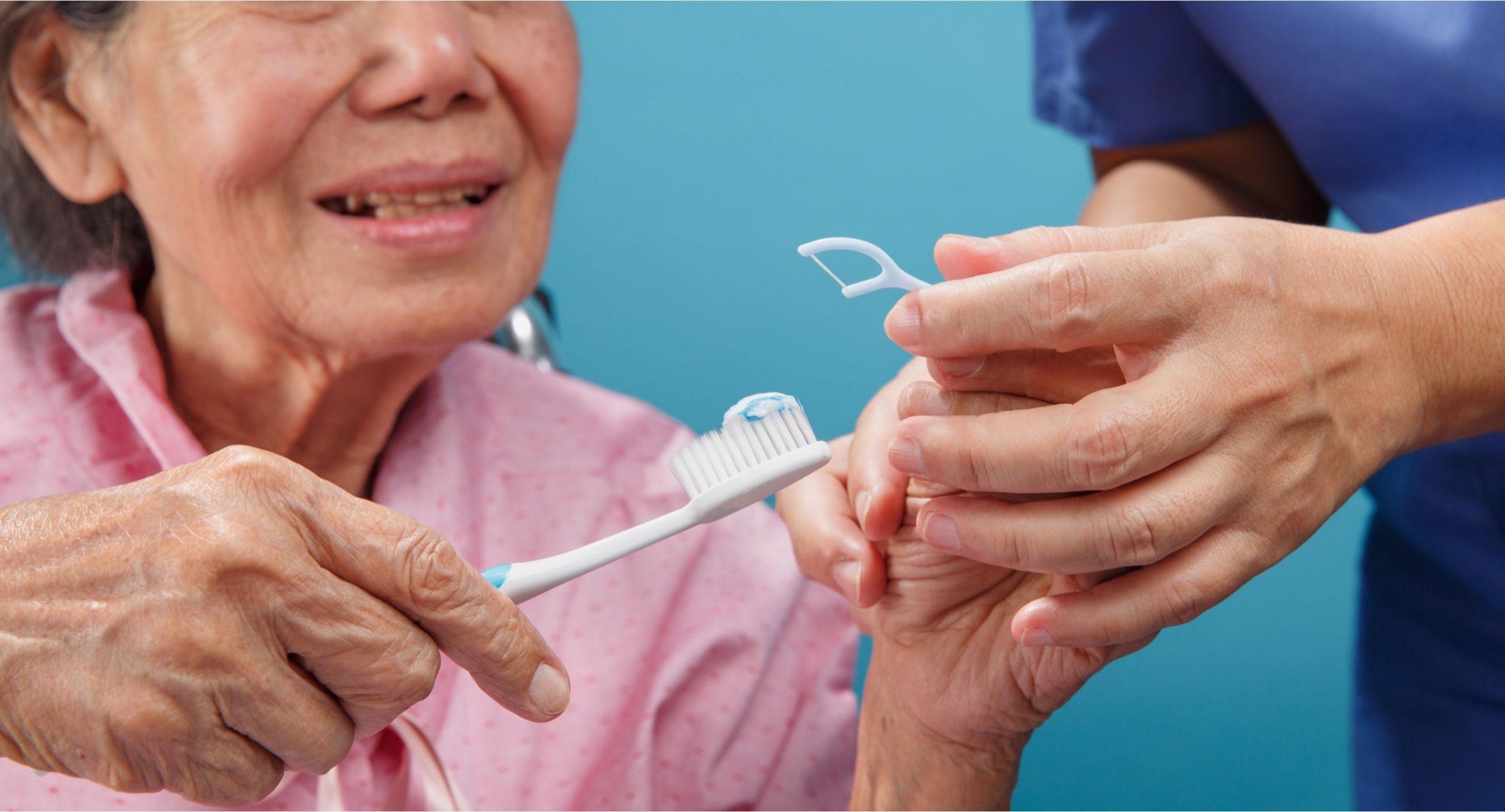
Image 2: Elderly woman helped by caregiver in oral and dental hygiene
3: Facial hair removal
Excessive facial hair growth can be annoying. It is a sign of poor hygiene and neglect. It can cause itching, skin irritation and harbor microbes and food debris.
Therefore, from time to time, you should help elderly male patients cut or remove facial hair. A razor is the best way to remove facial hair in bedridden and non-self-sufficient patients. However, a suitable shaving cream and aftershave should be chosen to prevent skin irritation and infection. Here are some products specifically designed for people with delicate skin, especially elderly patients, that you should consider using:
One of the most important things to consider when shaving a bedridden elderly patient is the use of aftershave and skin moisturizers. This is an essential step to keep the skin hydrated and avoid “shaving irritation.”
4: Washing hair
The second critical part of a good hygiene routine for the elderly is hair washing. This should be done once or twice a week.
If your caregiver has mobility problems, then you may need to wash his or her hair in bed or in a wheelchair.
Here are some steps and tips for washing the hair of a disabled, elderly or bedridden person:
- First, help the assisted person assume a higher position in the bed until his or her head hangs slightly over the edge.
- Second, put a large plastic bag or waterproof cloth under the head, and a basin to catch the falling water.
- Alternatively, a bedside wash can be used on which the bedridden person can rest his or her head.
- Start by wetting with lukewarm water. Make sure the water does not get into the ears.
- Apply shampoo and gently massage the head for one minute. Be sure to use a specialized, gentle shampoo. Do not use too much!
- Rinse shampoo again with water and dry thoroughly.
A similar technique can be used to wash the hair of a person in a wheelchair. Really helpful might be the use of a sink washer.
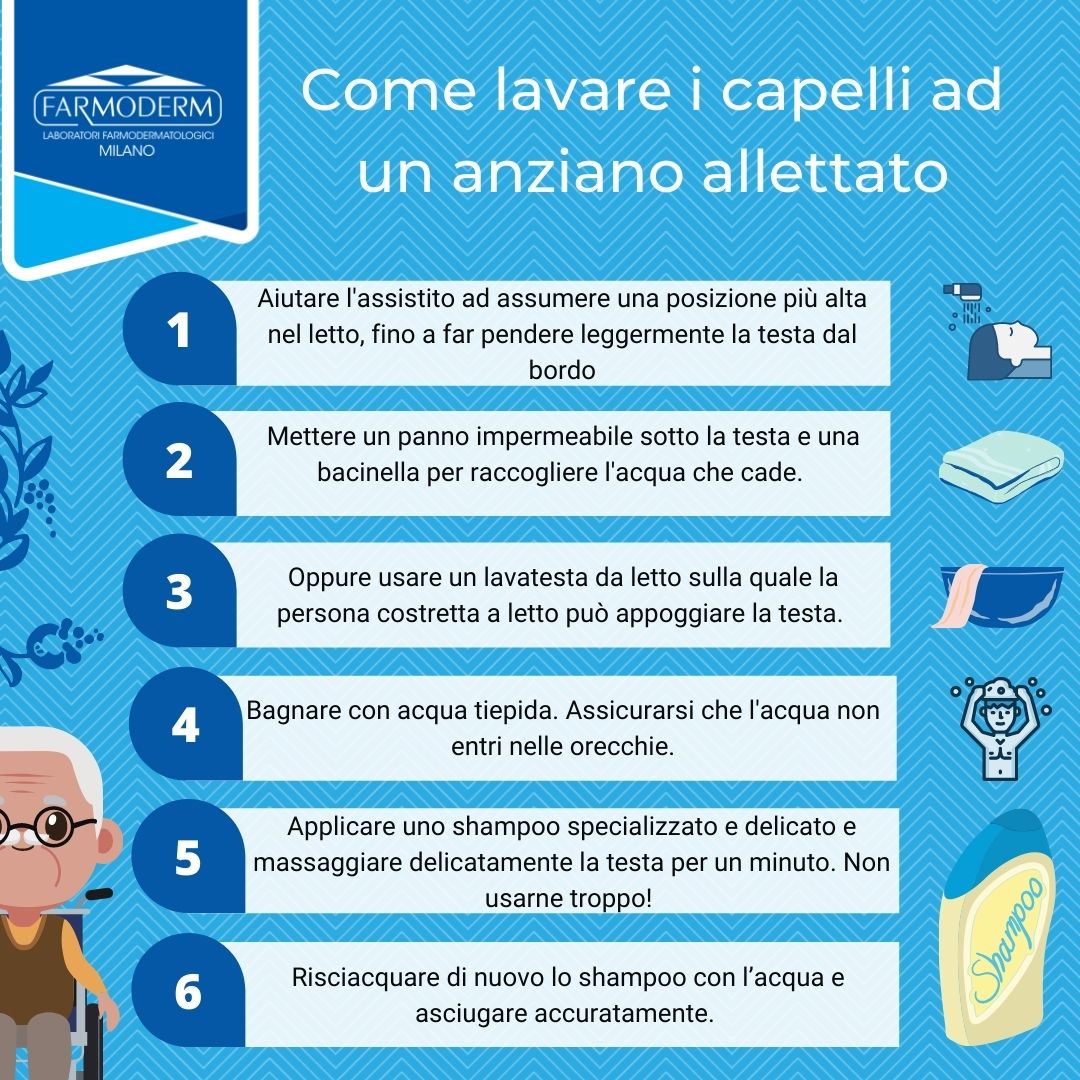
Infographic 3: How to wash an elderly person’s hair in bed.
5: Eye cleaning
From time to time, some residue may accumulate in the eyes of a bedridden patient. Therefore, it is advisable to clean your caregiver’s eyes daily with a damp cotton ball or cotton pad (use only water and no soap, of course). Just gently wipe from the inside to the outside of both eyes.
If there is a sticky crust on the eye, consider wetting the eyelid for 2-3 minutes with a damp towel before attempting to gently remove it. Once done, pat the eyes dry.
It is also possible to clean the eyes without using water through specific cleaners. Apply a small amount of product and proceed to sanitize, without rinsing.
6: Nail Care
Clean, trimmed nails are a sign of good hygiene. They also prevent elderly patients from excessively traumatizing the skin if they try to scratch because of itching.
Regular nail care can also allow the removal of bacteria from under the nails to prevent infection. You should clean under the nails daily using a cotton swab. Trim nails when necessary to keep them short and neat.
If your loved one has diabetes, you must be very careful not to cut the nails too short or cut the skin. This can cause wound infection in diabetics.
If you notice swelling, thick or brittle nails, changes in nail structure, changes in nail color, or foot ulcers, then consider seeing a medical specialist.
To keep the skin on your toes and fingers healthy, consider using a moisturizer with an isodermic formula that helps rebuild the depleted hydrolipid mantle. You can also try a cream with a lemon extract. Lemon extracts help lighten skin blemishes.
7: Change of clothes and/or diapers
Depending on their degree of independence, your assitant may need help changing clothes, underwear and often diapers.
First of all, always be careful to choose the right detergents and fabric softeners for washing clothes because they can cause irritation and allergic reactions.
To keep them comfortable, it is advisable to choose loose, elastic clothing. This makes it easier to change in bed or in the wheelchair. Try to avoid anything that fastens with buttons, as these can be annoying in bed and would make changing the patient’s clothes a real challenge.
Try to encourage the bedridden person to change his or her own clothes, and only lend a hand when they seem to need help. This helps them feel more capable and independent.
If your elderly loved one is wearing diapers, then you should change them as needed, even several times a day, to keep the area clean. You should never delay changing diapers. It can be degrading, very uncomfortable, and lead to skin infections. You can follow these steps to change diapers in a bedridden patient:
- Start by washing your hands and wearing protective gloves
- Place a waterproof pad on the sides of your caregiver and tuck it as far as possible under the diaper
- Unfasten the sides of the soiled diaper, tuck them under the patient and pull the diaper up to hip height
- Turn the assisted person to the opposite side
- Remove the soiled diaper
- Use special wipes to clean the area. Do not rub too hard so as not to injure the skin
- Apply skin barrier cream to the groin, genital, and sacral areas to keep the skin moisturized and prevent irritation and injury
- Once the skin is dry, open the new diaper and insert it under the caregiver while he/she is still on his/her side
- Move the caregiver so that he is straight on his back and then toward you as you readjust the clean diaper under him
- Fasten the new diaper and discard the old one in a closed plastic bag along with the gloves
- Wash hands thoroughly with soap and water
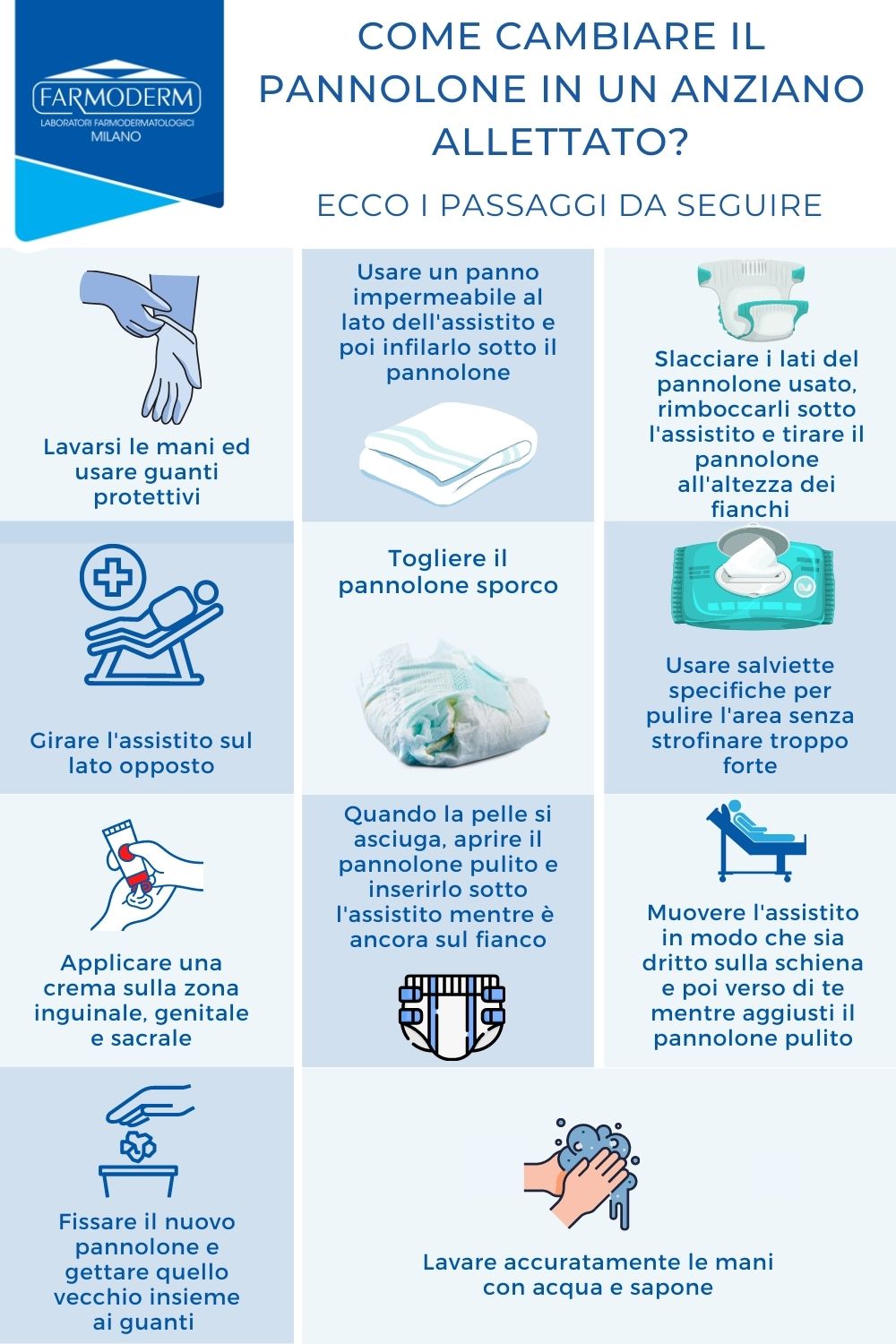
Infographic 4: Steps on how to change diapers in a bedridden elderly person