
Regardless of whether you have just had surgery, or have had an ostomy for some time, it is critical to maintain healthy peristomal skin.
Living with an ostomy can be complicated, and having to deal with skin irritation makes things even more difficult.
Fortunately, our guidelines for peristomal skin were drafted following the results of a Clinical Research conducted at La Sapienza University of Rome.. What’ s more, by enlisting the help of stomatal nurses, we can provide you with authentic, tried and tested tips to improve your peristomal skin hygiene routine.
By following our directions, you will notice healthy, elastic and irritation-free skin in no time. So, if you want to solve skin problems around your ostomy, or are simply wondering how to properly manage your peristomal skin, follow the advice we offer in the following section.
For perfect peristomal hygiene, products that do not contain skin irritants should be used, such as: lukewarm water, a cleanser with a self-balancing and antibacterial pH, ostomy-specific wipes, and isodermic cream.
Table of Contents:
- Make sure you have everything you will need on hand during your peristomal skin hygiene routine
- Wash your hands thoroughly
- Take a comfortable position
- Gently remove the collection system to avoid skin complications
- Use an adhesive remover (in case you need extra help peeling off the plaque)
- Use disposable paper to remove any residue
- Use lukewarm water, soap with self-balancing pH, and specific wipes to wash peristomal skin
- Dry the skin thoroughly before applying the new collection system
- Keep skin healthy by applying a small amount of isodermic cream
- Apply your new presidium
- Frequently asked questions
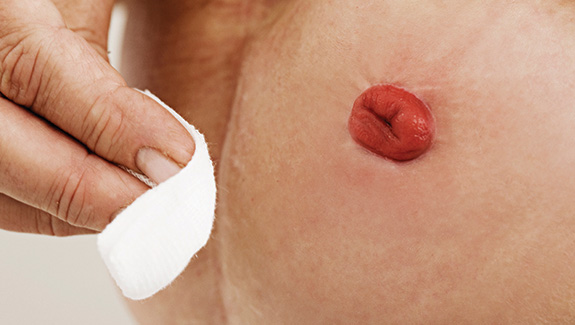
Here’s why you need to take care of your peristomal skin
First, you need to maintain healthy peristomal skin to facilitate ostomy management and to avoid complications that could lower your quality of life.
In addition, various studies reveal that, at some point in their lives, most ostomates tend to be affected by peristomal skin complications.
The main negative implications of unhealthy skin around the stoma are:
- Losses
- Irritation, itching, redness, ulcers and pain
- Discomfort, anxiety, frustration, depression and social isolation
- Higher costs for peristomal skin treatment
- An increased amount of time to complete the hygiene and skin care procedure
Despite all the risks involved in inadequate ostomy management, many people still ignore the importance of proper peristomal hygiene, which is precisely why they develop various skin complications around the stoma in the long run.
As you will see below, our survey conducted in Italy shows that most ostomates frequently experience peristomal skin complications that are mistakenly thought to be a normal condition.
IT’S NOT!
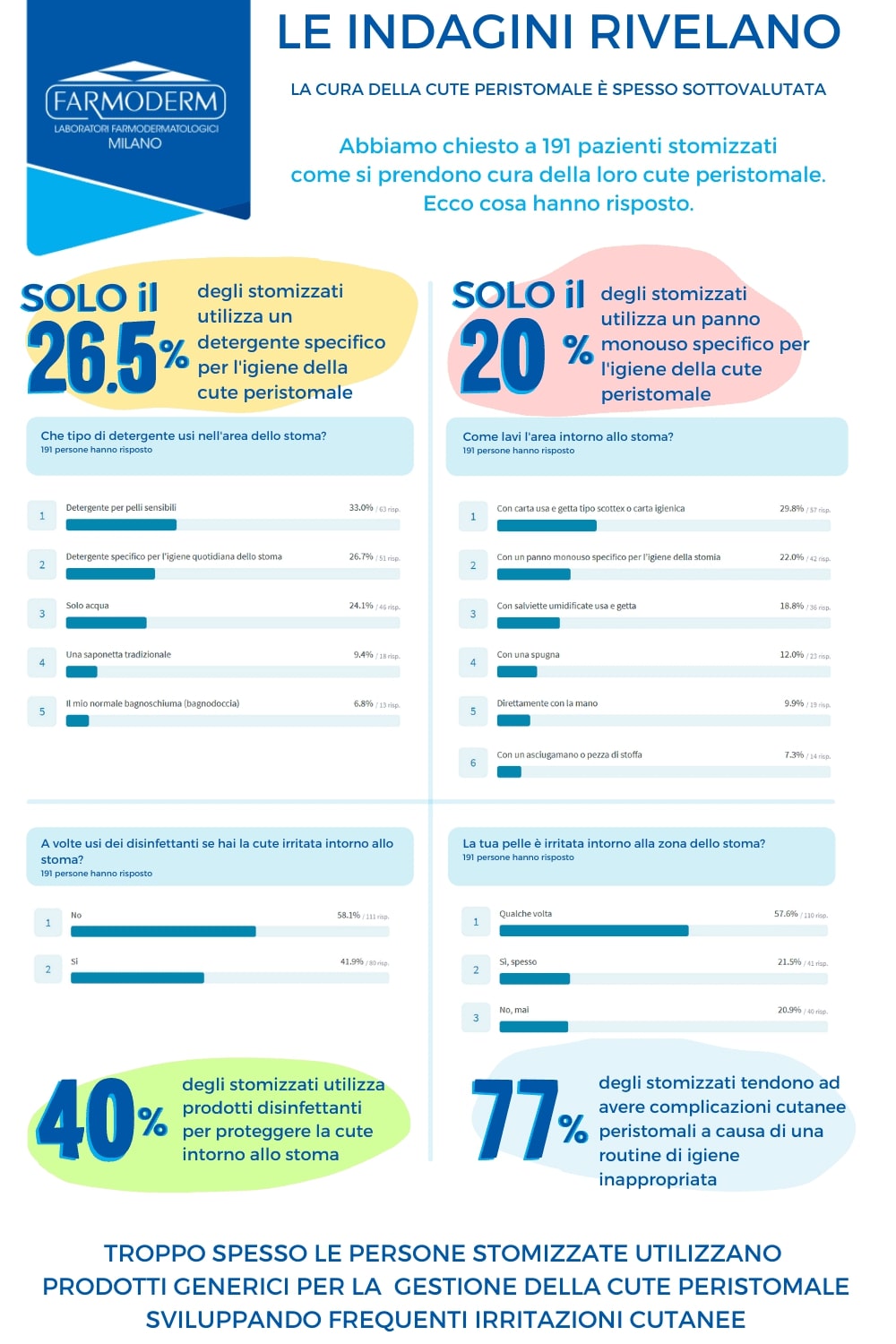
A proper daily routine for peristomal skin care is essential!
In addition, While supplies last, we are giving you the opportunity to purchase 2 Bioderm® Stoma Plus for the price of one.
This will ensure your skin around the stoma stays healthy and looks the same as the rest of the abdominal skin.
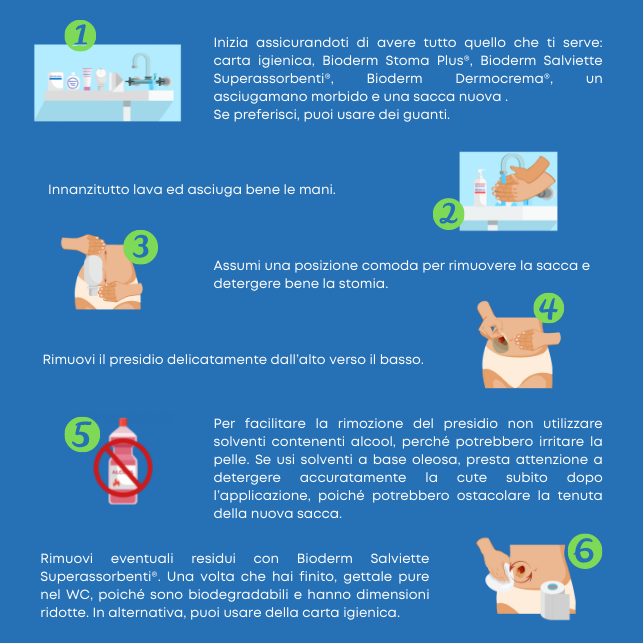
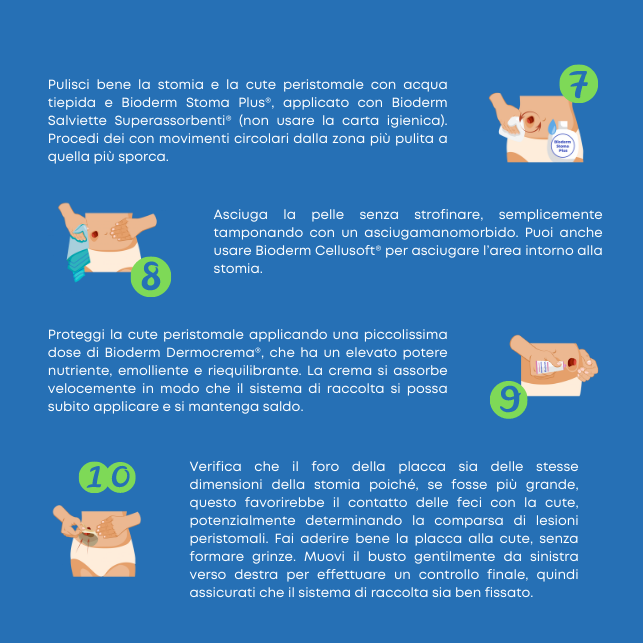
Routine hygiene of the skin around the stoma
In the following section, we will explain in depth what proper peristomal hygiene consists of and how to reduce the risk of complications.
1. Make sure you have everything you will need on hand during your stoma and peristomal skin hygiene routine
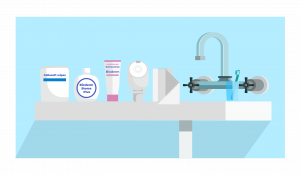
Before removing your collection system, remember to prepare your new one and keep all the products you need nearby. You will need the following things:
- A new collection system
- A pair of ostomy scissors
- About the disposable paper
- A towel
- Gloves (optional)
Place the towel under the belly for a more comfortable approach and greater safety.
2. Wash your hands thoroughly
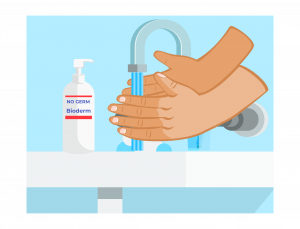
It is essential to wash hands before performing any peristomal skin management procedures, and thus prevent further complications.
Consider these steps before starting your skin hygiene routine around the stoma (it takes less than a minute).
- Wet your hands with warm water.
- Lather hands well and rub firmly.
- Brush the nails well.
- Rinse hands thoroughly with running water to remove all soap.
- Dry your hands with a dry, durable washcloth (that does not release residue).
3. Assume a comfortable position before starting the ostomy hygiene routine
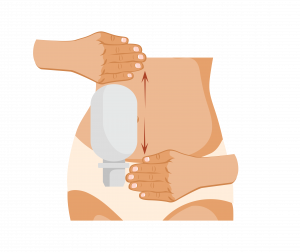
Contrary to popular belief, there is no single position to adopt during peristomal skin cleansing. Therefore, assume the position you find most comfortable according to your needs.
Many experienced stomatherapy nurses suggest, at least in the initial stage, that you perform the peristomal skin hygiene routine in front of your bathroom sink and mirror, in an upright position, so that you have more control over the movements you will make and therefore a greater feeling of safety.
Instead, some ostomates prefer to sit on the bidet, facing the wall, to have better access to running water.
As mentioned above, prepare everything you need in advance and keep your products on hand so that you can perform the entire procedure on the bidet without having to get up.
4. Gently remove the collection system to avoid skin complications.
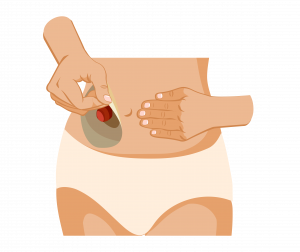
When removing the ostomy pouch, avoid pulling the pouch too vigorously, or pinching the skin in an effort to grasp one end of the plaque.
It is essential that you pay special attention to this step so as to avoid skin trauma.
The best way to remove plaque is to press lightly on the abdomen near one of the upper edges of the plaque to make sure you can get a good grip on it.
Meanwhile, use your other hand to peel off the adhesive barrier, carefully and slowly, starting from top to bottom.
You may notice a different peristomal skin color immediately after removing the collection system. The skin area should acquire its normal color after a few minutes.
5. Use an adhesive removal product (in case you need extra help peeling off the plaque)
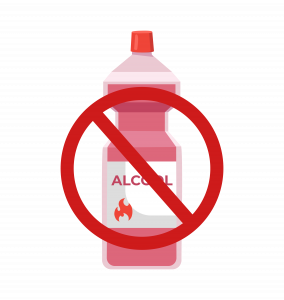
Some people find this procedure painful. If you are one of these, consider using hot water or an adhesive solvent.
Adhesive solvents can be extremely useful, in case you need additional help.
This is because they minimize the risk of skin damage during plaque removal by dissolving the adhesive part.
If you use oil-based solvents, be sure to wash and rinse the peristomal skin thoroughly. Otherwise, the new collection system will not stick properly due to the oily substances in the solvent.
This could cause the new plaque to easily detach and/or leak.
The use of alcohol to remove plaque is outdated and mostly inefficient.
Avoid using alcohol-based products because they cause dryness, itching and irritation. Also, you may experience severe pain if it accidentally comes in contact with your ostomy.
6. Use soft but strong disposable wipes to remove any residue
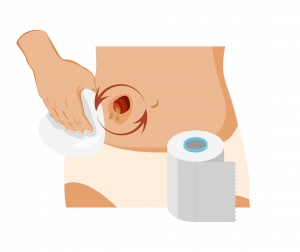
First of all, rewash your hands well with running water.
Then remove any dirt around the ostomy. To do this, experienced nurses recommend the use of special disposable wipes that combine the absorbency of cellulose with the softness and strength of viscose to reduce the risk of possible chafing injuries, ensuring deep cleaning without leaving residue.
Alternatively, you can use toilet paper.
7. Use warm water, soap with self-balancing pH, and specific wipes to wash the peristomal skin
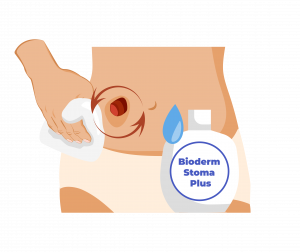
Wash the affected area with warm water (about 37ºC), a cleanser with a self-balancing pH and another appropriate wipes. Avoid excessive rubbing, clean from the outside in, using circular motions, and rinse thoroughly.
Experts suggest using a cleanser that can provide the skin with all the trace elements it needs to rebalance its physiological pH and rebuild the dermoprotective barrier, and of course that does not contain anything that can irritate the skin. If you do not have such a product in your home, such as Bioderm Stoma Plus, be sure to use at least a cleanser for sensitive skin.
During this procedure, your stoma may give off small amounts of effluent. In this case, to clean your stoma again, consider using a physiological serum.
You may also notice small amounts of bleeding, as the stoma has many small blood vessels that can bleed very easily; so, don’t worry, on most occasions it stops very quickly. However, if your peristomal skin is bleeding for a long time, you most likely need to consult your stomatherapist.
8. Dry the skin thoroughly before applying the new collection system
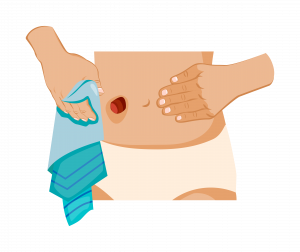
According to several stomatherapists, after cleaning the peristomal skin, the area should be dried very carefully. Use special wipes or, alternatively, a soft towel for this task, but make sure it does not irritate the skin.
Some surveys show that many ostomates dry the peristomal skin by using a hair dryer in cold air mode; or by letting the area dry naturally for 1 to 2 minutes. Despite this, we suggest that you follow the advice of stomatherapists to avoid possible stomatal contamination and effluent spillage.
It is critical to adequately dry the peristomal skin to avoid further skin complications.
9. Keep the skin healthy by applying a small amount of isodermic cream
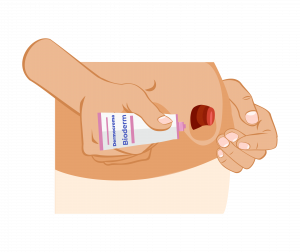
Many professionals recommend the use of an isodermic cream. A small amount of this product, applied daily, will keep the skin around your stoma healthy.
Using an isoderm cream will help you restore the hydrolipidic content of the protective coat, an essential factor in keeping skin healthy, toned, and supple.
Make sure to use a cream that leaves no greasy residue and allows you to apply plaque without difficulty.
10. Apply your new garrison
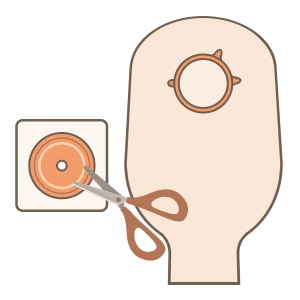
Once the skin around the stoma is clean and dry, you can go ahead and apply the new collection system.
Keep a wipe specifically for stoma and peristomial skin care next to you during this procedure, in case any effluent spills occur.
If you do not use pre-cut plates, go ahead and measure the thickness of your stoma, and then cut out the right size plate hole to fit the shape of your ostomy (e.g., circular or oval).
Remember to leave a margin of 1.5 to 3 mm between the stoma and the device.
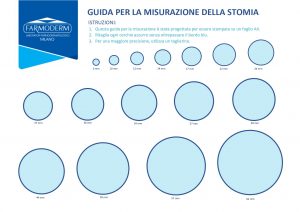
To measure your ostomy correctly, use the measuring guide that comes with ostomy bags. However, most of the time, these guides are made for circular stomas.
If you have a loop ostomy or don’t have a measuring guide, don’t worry, because you can use the following:
Download the guide for measuring circular stoma.
Download the guide for measuring the stoma ovale.
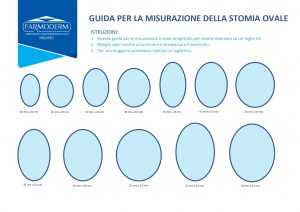
Use the guide to identify the diameter of your ostomy so that you can drill an appropriately sized hole. Pay close attention to this step, and avoid leaving too much skin exposed.
We recommend that you do this in front of a mirror, or with the help of a small mirror, so that you are in full control of your actions, and avoid probable mishaps due to unfamiliarity.
Once the stoma is measured, place the measuring guide in the center of the adhesive area of the plate and use a pencil or marker to trace the area to be cut out.
Use the appropriate plaque scissors to avoid damaging the device.
Run a plaque test on your stoma, and if it fits correctly, proceed with your routine.
KEEP IN MIND: it is normal for your ostomy to change in size and shape over time; however, we recommend that you check your ostomy regularly and make sure there are no unusual changes. Therefore, see your stomatherapist if your ostomy:
- It begins to retract; it is flush with the skin;
- It shrinks
- It expands outside the abdomen.
If you use a one-piece collection system
Once you have cut the plate to the correct size and shape, use your fingers to smooth out the edges.
For best adhesion, gently warm the adhesive by gently rubbing the device between your hands, then remove the film and without touching the adhesive area, place the bag over the stoma and apply gentle pressure to seal the garment with the skin.
If you use a two-piece collection system
Apply the plaque to the peristomal skin with your fingers making a circular motion to make sure the device is attached properly. Also make sure that neither the skin nor the plaque has creases.
Place the ostomy pouch on the plate by carefully positioning it, starting from the bottom to the top, and make sure to connect the two parts correctly.
If you use a draining bag, don’t forget to close the valve.
Questions & answers about ostomy care
By adopting these ten simple steps in your daily routine for caring for the skin around the ostomy, you will quickly notice an improvement in the skin, which will appear healthier and more elastic day after day.
Many ostomates have additional concerns about how to take care of peristomal skin, and in the following sections you can find expert answers to frequently asked questions on the topic.
Take a look, they may be useful:
What color should a normal, healthy stoma be?
A healthy stoma is pink or red in color. However, it may appear dark red and inflamed during the first week after surgery. In this case, do not worry, because your stoma will take on its normal color during the following weeks.
Most of the time, a color change in the stoma indicates that it is not receiving the blood supply it should, causing the stoma to become paler or darker.
If you should notice a different color than normal (pink or red), such as dark red, purple, gray, or black, contact your health care provider.

How can I remove the hair around my stoma?
For better adherence and plaque removal and to reduce the possibility of skin irritation, experts suggest removing hair from the peristomal skin area.
Consider using an electric razor in the direction of hair growth. Alternatively, cutting hairs with curved-tip scissors is also suggested. Always pay special attention to the stoma to avoid accidental injury. After shaving, rinse thoroughly with water and cleanse the affected area with a cleanser with a self-balancing pH.
Avoid shaving with a razor or depilatory creams; it may cause micro wounds and skin infections. However, if you decide to use either of these two ill-advised methods, consider using an ostomy powder or an isoderm moisturizer free of mineral oils to revitalize the skin after shaving.
Can I use toilet paper and baby wipes to clean my peristomal skin daily?
Do not use toilet paper or any other paper for your hygiene routine as they may cause rubbing irritation, release residue on the skin and cause infection.
Also avoid using neutral baby wipes that contain alcohol, oils and other harsh chemicals. So use them only sporadically, in case of emergency.
Experts recommend using them only on special occasions, such as outside the home for more convenient and faster cleaning, when you don’t have the opportunity to use everything you need.
REMEMBER: baby wipes are not designed for peristomal skin care! Consider using appropriate wipes, which would not cause any harmful consequences.
Table comparing the effectiveness of toilet paper, wet wipes, and disposable wipes specifically for peristomal skin care.
| ✓ PRO | ✗ WITH | |
|---|---|---|
| Toilet paper | Cheap* | Does not absorb properly |
| Rough material, may cause irritation | ||
| Leaves residue as it flakes easily | ||
| A large amount of paper is required for proper cleaning | ||
| ✓ PRO | ✗ WITH | |
|---|---|---|
| General wipes | Soft | Non-absorbent |
| Practical | May contain harsh chemicals that cause skin irritation | |
| They clean very well | May contain oils that hinder plaque adhesion | |
| They can leave residue | ||
| ✓ PRO | ✗ WITH | |
|---|---|---|
| Specific wipes | Very absorbent | Slightly more expensive* |
| Durable and practical | ||
| Do not contain aggressive or oily components | ||
| They do not release residues | ||
| Very soft, so they do not irritate the skin |
What products should I use to prevent peristomal skin irritation?
Ostomates with healthy peristomal skin do not need any kind of skin protector. In case of damaged peristomal skin, products such as barrier cream/paste, powders or films should be used to relieve irritation and itching.
These products should be used with caution. Therefore, avoid using them often.
Avoid the use of barrier creams that are too greasy or could compromise the adhesion of the collection system.
Creams are useful for the prevention and treatment of peristomal skin irritation, but care must be taken.
A small daily amount of isodermic cream, can help you prevent annoying irritation.
What should I do to avoid irritated skin around my ostomy?
The best way to avoid irritated skin around the stoma is to make sure the collection system adheres properly to the abdomen.
Make sure there are no creases each time you apply a new garment.
Remember that your ostomy may change size over time, so check the size and shape of your ostomy often to always have your collection system fit properly and avoid leakage.
Take the time to check your skin each time you change your ostomy garment and consider using a small amount of isodermic cream to keep your peristomal skin supple and healthy.
When is the best time of day to take care of my peristomal skin?
Each ostomate prefers a different time to change the collection system. Contrary to popular belief, there is no best time that will suit all ostomates.
To figure out what is the best time for you, start by performing your care routine when your ostomy is least active. Therefore, most ostomates prefer to practice this procedure before or two hours after eating or drinking.
Some people tend to take care of their peristomal skin immediately after bathing or showering. Other people prefer to do it early in the morning, while others prefer to do it at the end of the day.
It will really depend on your needs and preferences, just try to choose a convenient time during the day when you can perform your routine unhurriedly and in total comfort.
What is the best ostomy care for me?
To determine which type of collection system to use, you need to consider the type of ostomy you have and the consistency of your effluent.
One-piece garrisons are generally recommended for people with colostomies who produce more formed stools and require only one or two changes per day.
2-piece garrisons are more appropriate for people with ileostomy, urostomy and ascending colostomy, who produce more watery stools and therefore require more frequent changes during the day.
In case of very liquid stools, it would be better to use open bags for a more practical approach.
However, a 2-piece bag system is recommended for all those people who need to replace the device frequently, thus reducing the risk of damaging the peristomal skin.
Therefore, if you change your garment many times a day, consider using a 2-piece device.
Can I wash my ostomy and peristomal skin in the shower?
Many ostomates like to shower without the collection system. As long as you use a cleanser with self-balancing pH to clean the abdomen and peristomal skin area, it is safe to shower without a device.
If, on the other hand, you prefer to take a shower with your presidium, remember to cover the filter (in case you use a filter bag system), before bathing, with one of the covers provided with the presidiums.
Take a look at this article, if you want to learn more about taking a shower with or without a presidio.
In case you are afraid that water may enter your stoma, you could use an ostomy plug. However, don’t be afraid, because you don’t run any risk taking a shower without the bag.
Just do it and relax. Take off your ostomy garment and enjoy your shower!